A section-by-section walk through the AKC breed standard, with photographs and commentary by Susan Coe, Laurie Stargell, and Pamela Geoffroy. The italicized text inside each section is the standard verbatim; the surrounding text is BCOA commentary intended for breeders, judges, and serious students of the breed.
The Basenji is a small, short haired hunting dog from Africa. It is short backed and lightly built, appearing high on the leg compared to its length. The wrinkled head is proudly carried on a well arched neck and the tail is set high and curled. Elegant and graceful, the whole demeanor is one of poise and inquiring alertness. The balanced structure and the smooth musculature enables it to move with ease and agility. The Basenji hunts by both sight and scent. Characteristics: The Basenji should not bark but is not mute. The wrinkled forehead, tightly curled tail and swift, effortless gait (resembling a racehorse trotting full out) are typical of the breed. Faults: Any departure from the following points must be considered a fault, and the seriousness with which the fault is regarded is to be in exact proportion to its degree.
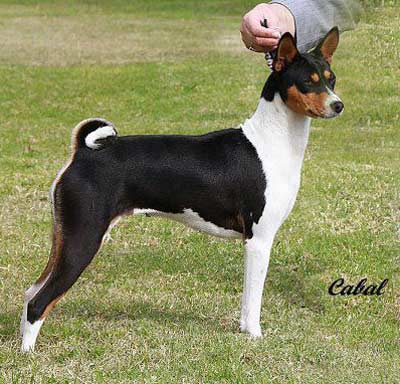
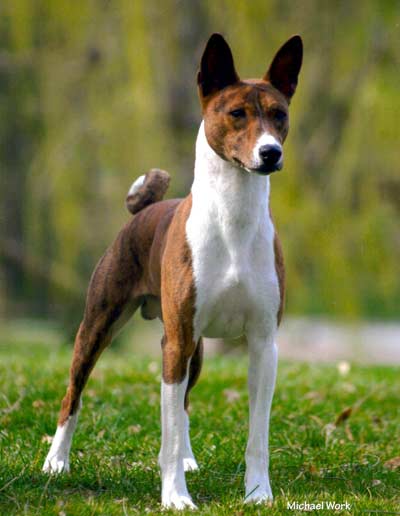
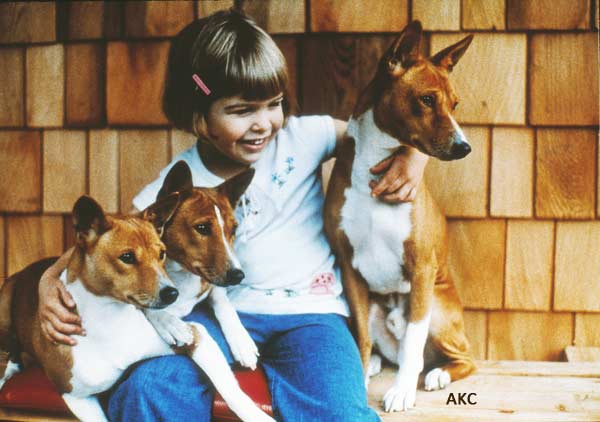
The General Appearance section is meant to distill the essence of the breed. These overall qualities make Basenjis unique from other dog breeds. Each of these broad strokes will be covered more deeply in the remainder of The Standard Dissected as they appear in the Standard. To make these attributes clearer, an image of a strong example is provided for each on this page.
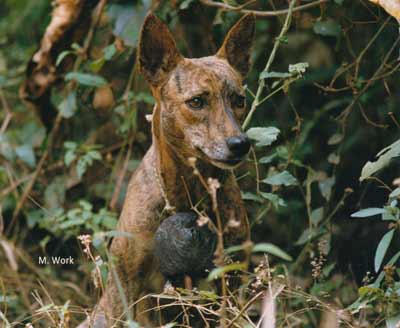
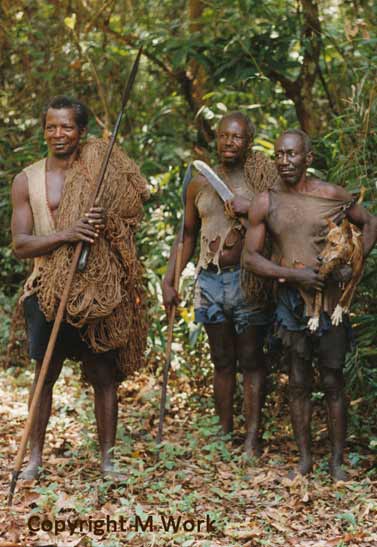
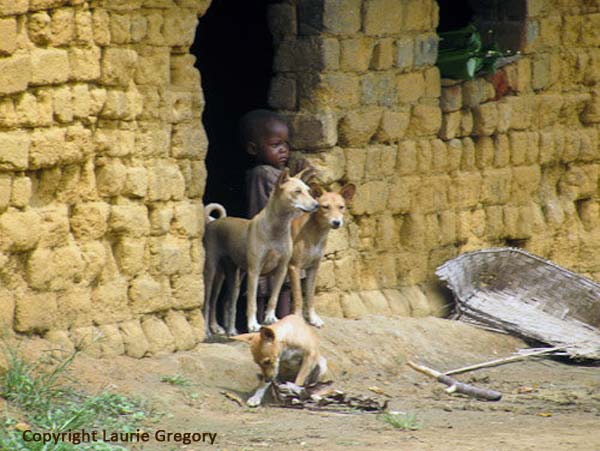
This photo taken in Africa in 1987 introduces the first sentence: "The Basenji is a small, short haired hunting dog from Africa." The Basenjis are used to drive game into nets for the hunters in Africa. Basenjis are willing to hunt in other ways as well including coursing in open country, pointing, scent and have been known to go down a hole after game.
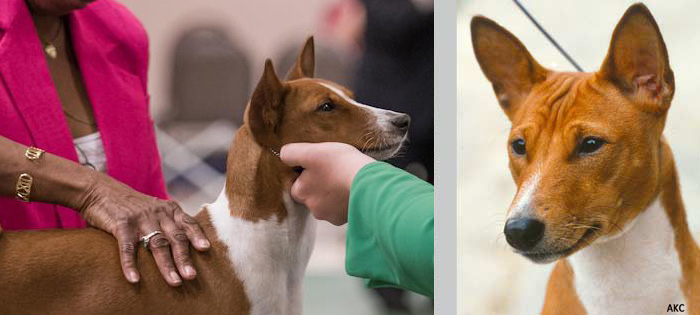
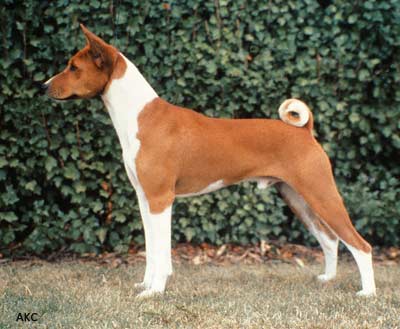
"It is short backed and lightly built, appearing high on the leg compared to its length."
"The wrinkled head is proudly carried on a well arched neck and the tail is set high and curled."
"Elegant and graceful, the whole demeanor is one of poise and inquiring alertness."
"The balanced structure and the smooth musculature enables it to move with ease and agility."
"The Basenji hunts by both sight and scent."
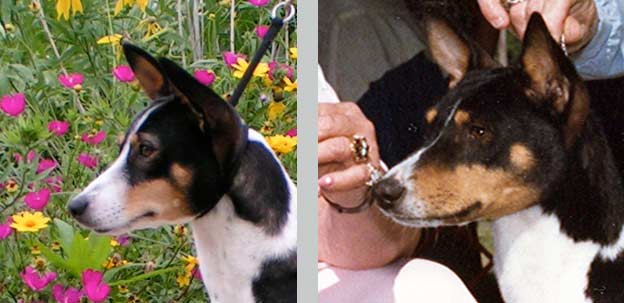
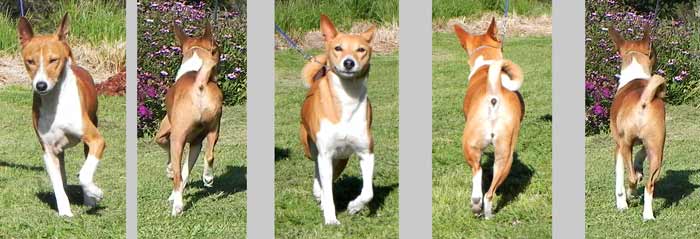
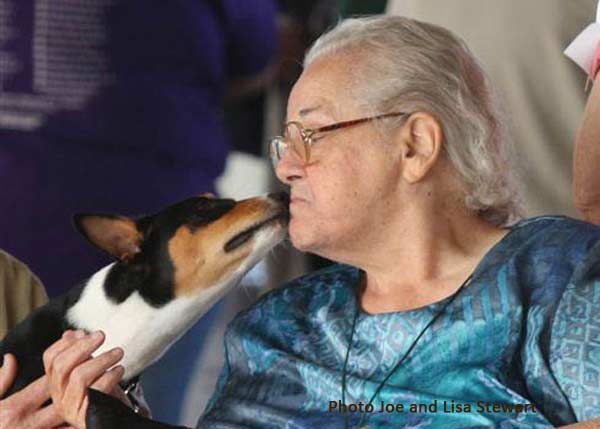
"Characteristics: The Basenji should not bark but is not mute." There isn't sound here to show off our yodelers. These photos demonstrates how it can look with the photo on right showing the mouth just opening in temptation, the beginning of the sound in the middle and finally the head thrown back for the great joyous Basenji yodel. Basenjis may rarely make one or two insubstantial woofs in alarm but are generally quiet. Sad Basenjis can howl and distressed Basenjis have a pretty awful scream.
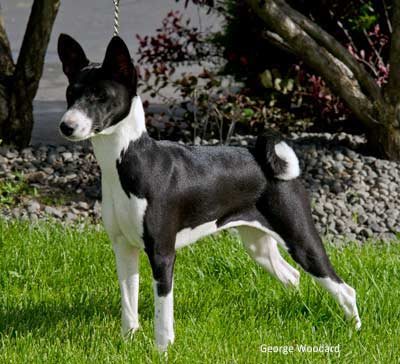
"The wrinkled forehead, tightly curled tail and swift, effortless gait (resembling a racehorse trotting full out) are typical of the breed."
"Faults: Any departure from the following points must be considered a fault, and the seriousness with which the fault is regarded is to be in exact proportion to its degree." Over the years the section on faults in the Standard has varied as different faults seem most important at each time a revision was made. In 1990 the AKC encouraged clubs updating their standards to use this more general statement. It is a bit vague but it should also be timeless.
Every dog has virtues and faults. As a breeder you must be able to recognize what is correct and what is undesirable for a Basenji. It is very easy to point out faults, but it is more important to think positively and look for the dog with so much virtue that the good carries the day. Each breeder is going to handle the balance between virtues and faults in their breeding program as an individual. In this way, a breeder makes their mark by developing a line of Basenjis that reflects the Standard as they see it; and yet their line is different, individual to their vision of the correct Basenji.
Comment on Section
This quote applies equally to breeders as to judges: "When judges are completely besotted by glamour, or by showmanship, or by exaggeration or blinded by coat so profuse as to hide the true dog, one of the most important qualities in livestock goes out the window. Symmetry or balance between the parts, which is unique to each breed, is a paramount ingredient and contribution to breed type. Unless we respect the symmetrical harmony of the anatomical parts of the dog, each section to the whole we are heading for caricatures."
Peter Luyten, all-breed Australian judge in Classic Terriers for "DOGS Victoria" August 2012
The General Appearance description forms the larger balanced picture of Basenji type. Basenji breed type is dependent on these unique overall features. Keep all the broad statements from this section in mind as you learn about the details of the Standard. Do not let the riveting details make you forget the whole dog, the details should build into a balanced whole.
Ideal height for dogs is 17 inches and bitches 16 inches. Dogs 17 inches and bitches 16 inches from front of chest to point of buttocks. Approximate weight for dogs, 24 pounds and bitches, 22 pounds. Lightly built within this height to weight ratio.
Measuring the dog is very simple. "Ideal height for dogs is 17 inches and bitches 16 inches. Dogs 17 inches and bitches 16 inches from front of chest to point of buttocks."
With the dog standing in a relaxed manner, that is not stretching up to make itself impressively tall, the height is measured from ground to the highest point of the shoulder blade. The length is measured from the slight forechest that all dogs have to the furthermost point of the rear, that is usually at the end of the pelvis at the point of buttocks.
"Approximate weight for dogs, 24 pounds and bitches, 22 pounds." The weight is difficult to show in a photo. As a breeder you should at least understand what your own dogs weigh and measure as compared to the ideal as described in the Standard. You may find that other breeders have dogs that look rather different even though they are correct for the Standard. It is very difficult to be sure about size, weight and substance without actually measuring and weighing the dogs.
Generally dogs that appear square may actually be up to about 1 inch longer than tall. These slightly long dogs that appear square usually have particularly good shelf in the rear and good correct angulation in the front.
A dog an inch taller than standard should probably weigh a couple additional pounds to stay in balance and have the correct substance, body and bone mass. A long-bodied dog would similarly weigh more to have the correct substance. An additional part of substance is having the correct bone shape and size to maintain a balanced dog.
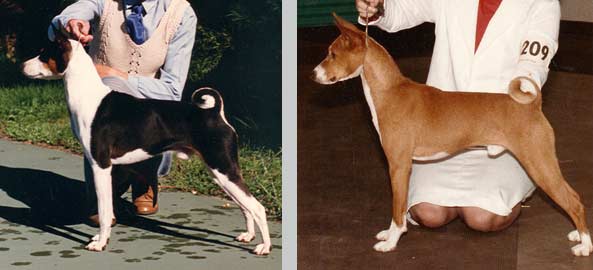
"Lightly built within this height to weight ratio." The weights and sizes given should lead to a dog that looks masculine and a bitch that is feminine as shown in the examples above. The dog and bitch above are good examples of desired size and substance. The Basenji is a moderate dog so should be neither as heavy and boxy as a pulling breed nor as narrow as the specialized sighthound breeds.
The two photos above show a bitch (left) lacking in body substance. Note that her chest does not reach her elbow and she is too narrow. The dog (right) is rather heavy and too long. The photo below right shows good substance for a bitch as seen from the front.
It is easy to be confused in the show ring if all the dogs are either too large or too small. Photos don't always show substance or size correctly. Even in person weight to height/length ratio can be confusing. In addition, something like muscle quality can affect the actual weight of the dog. With your own dogs at home you can weigh and measure to begin to understand the substance of the dogs you are using in your breeding program.
Another consideration when dealing with weight and substance is maturity. A young dog may well be a bit narrow and lack substance. Most dogs keep maturing until they are about 3 years old when they gain their final body depth and width. Often the head also matures until around that same age. Don't assume the cutest puppy is going to turn out to be the most correct in size, weight and substance as a mature adult.
The head is proudly carried. Eyes: Dark hazel to dark brown, almond shaped, obliquely set and farseeing. Rims dark. Ears: Small, erect and slightly hooded, of fine texture and set well forward on top of head. The skull is flat, well chiseled and of medium width, tapering toward the eyes. The foreface tapers from eye to muzzle with a perceptible stop. Muzzle shorter than skull, neither coarse nor snipy, but with rounded cushions. Wrinkles appear upon the forehead when ears are erect, and are fine and profuse. Side wrinkles are desirable, but should never be exaggerated into dewlap. Wrinkles are most noticeable in puppies, and because of lack of shadowing, less noticeable in blacks, tricolors and brindles. Nose--Black greatly desired. Teeth: Evenly aligned with a scissors bite.
The first portion of this section starts with head carriage: "The head is proudly carried" again emphasizes the proud bearing Basenjis display. The proud, high carriage on well arched neck is demonstrated by a still and a moving Basenji in the two photos above.
"Eyes: Dark hazel to dark brown, almond shaped, obliquely set ... Rims dark" are features well presented on this girl.
The range of eye color can vary quite a bit. Here is a brindle male with an intense expression with a different but acceptable eye color. The dog here and the one above give a range of desirable eye color for Basenjis. Again note how the eyes are obliquely set.
The term, far-seeing is used in sighthound standards and appears in the Basenji standard as well: "...and farseeing." It is an elusive term but a far-seeing eye would suggest the dog's ability to sight game at a great distance away and the concentration the dog would have when game is sighted. The dog will appear to be looking right through you. The standard has described expression differently in the past. A "puzzled expression" was described in the 1943 Standard. The 1954 Standard had no comments regarding expression. The 1990 Standard (the current version) introduced the words "Eyes...farseeing."
All owners are aware that the same Basenji can alter its expression amazingly by changing the eye shape, the ear set, what the mouth does, etc. Clearly they are able to show many expressions including teasing, serious, devoted, starving, laughing, disdain, mischievous, etc. but the Standard does not cover all the expressions Basenjis are capable of.
The photo above shows the ears as described in the Standard: "Ears: Small, erect and slightly hooded, of fine texture and set well forward on top of head." The ears are both slightly cupped in shape and tilted forward. From the profile the line formed by the arch of the neck continues along the back of the ears.
This photo of a trotting Basenji shows the ears correctly positioned right on the top of the head. The ability of the Basenji to hold the ears high, hooded and to swivel them in and out are important in making wrinkle and for the overall expression.
The series of photos above show a variety of ears in comparison. The dog on the left has long, narrow ears. The dog in the center has good ears in both size and set. The dog on the right has large, low set ears.
The photo above shows "The skull is flat," as seen from the side view. Also the line of the skull should be parallel to the line of the muzzle. A dish face or a domed skull is not desirable.
Additionally the skull should be "...well chiseled and of medium width, tapering toward the eyes." The words "well chiseled" mean that the modeling of the bone structure of the skull should be as if a skilled sculptor was involved making fine adjustments and that shape and modeling should show through the skin with flat plains, good transitions between plains and clearly visible brows.
"The foreface tapers from eye to muzzle..." means the skull tapers smoothly from the skull to the muzzle so that there is a smooth transition from cheeks into muzzle. The photo above shows the foreface tapering from cheeks for a smooth transition into the muzzle. A dog with head that looks like a squirrel with its mouth full of nuts is considered to be "cheeky." This is not desirable in a Basenji.
The sentence in the Standard continues with "... with a perceptible stop." "Stop" is the angle between the skull and the nasal bone (muzzle) near the eyes; it separates the two plains. The four photos above all show correct stop.
The brow line, the bony arch above each eye, is important to the shape and character of the head; the brows also protect the eyes from injury. The photo above on the left is a dog lacking the brow line making the head too flat and more streamlined than is typical of a Basenji. The photo on the right shows a good line of the brow, the ridge over the eye that ends the skull.
A cheeky appearance is seen when the taper between the skull along the side into the muzzle is too abrupt. This is not desirable. These two photos compare a good head on the left with a cheeky head on the right. Sometimes this cheekiness develops as the dog matures at about 3 years old.
This 11-year-old male has kept the same head since he matured. The best heads do not become cheeky as the dog gets older.
As you breed, you will become familiar with how your dogs mature and will gain confidence in selecting the puppy head that will be correct when the dog has truly finished maturing.
The head on the left above shows good transitions as indicated by the red lines. Transitions are smooth from the skull at the bottom, through the foreface taper into the muzzle and then into the rounded cushions as called for in the next sentence of the Standard: "Muzzle shorter than skull, neither coarse nor snipy, but with rounded cushions." The photo on the right with the head viewed from the side shows the muzzle is shorter than the skull. The Basenjis standard is not specific about these proportions therefore some variation in proportions can be accepted. In the past one heard the term "wedge-shaped" for the overall shape of the head. A very long head is typical of specialized sighthounds where aerodynamics is the most important consideration. A very long head with muzzle shorter than skull will give quite a different impression than wedge-shaped. Wedge shape would indicate the smooth side transitions as well as the general width as compared to the length of the entire head.
The clause "Muzzle...neither coarse nor snipy," is explained by Veronica Tudor-Williams in 1976: "Only a small amount of chin should show below the top lips too much lower jaw gives a square undershot look, sometimes called a hammer-jaw, but too little under jaw gives a snipy appearance." The dog in the photo above has a good underjaw without any appearance of being over done or over strong in the under jaw. Additionally, one needs to look at the muzzle from above to note that it is not overly pointed. See the photo showing transitions and cushion above for the correct top view. The cushioning helps keep the muzzle from being snipy or pointy as well.
"Wrinkles appear upon the forehead when ears are erect, and are fine and profuse." Lovely profuse wrinkles on both the red dog above and the black dog, however wrinkles are usually much harder to see (and especially to photograph) on the black and tricolor coats.
"Side wrinkles are desirable, but should never be exaggerated into dewlap." Side wrinkles are not often seen on adults but they are a desirable feature when present, as in the photo above. However, side wrinkle should never give the affect of the bloodhound or basset head with wrinkles dripping off the head making even a single fold hanging down. The lips fit smoothly to the mouth and there should be no flew or drooping at the corner of the mouth.
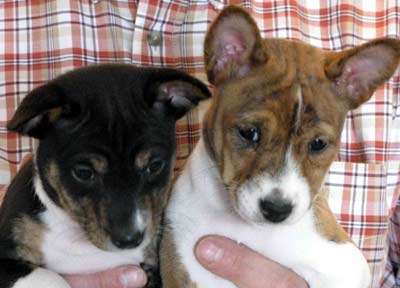
"Wrinkles are most noticeable in puppies, and because of lack of shadowing, less noticeable in blacks, tricolors and brindles." Two photos of puppies demonstrate how the shadows on the red puppy's wrinkles make them very clear. While the shadows do not show up on the black and tricolors since the black shadow is not so visible. This is especially true in some dark show buildings where wrinkles are hard to see on any color Basenji. Brindles Basenjis often have a complex pattern of dark stripes on their heads, which can hide and confuse the wrinkles' shadow lines as well.
Basenji wrinkle is not always visible. A relaxed dog, with his ears at half mast will not have wrinkle. But once that dog is animated with ears pricked up and forward and eyes gazing intently the wrinkles should appear.
"Nose: Black greatly desired." This is another interesting change from previous versions of the Basenji Standard. The description in the 1943 Standard was: "Black greatly desired, but a pinkish tinge should not penalize an otherwise first-class specimen." In 1954 this changed to: "Nose - Black greatly desired. A pinkish tinge should not penalize an otherwise first class specimen, but it should be discouraged in breeding." It was only in 1990 that the comment on the pink tinge was dropped entirely. The Basenji is not meant to be just a pretty face so the perfectly black nose should not be the only goal. The tricolor Basenji in the photo on the right above has a lovely head and a slightly pinkish nose. This is still a very nice head and an attractive Basenji.
Additionally some dogs with black noses tend to get a pinkish tinge in the winter when they do not get enough sunlight.
Sometimes there will be a puppy that takes quite a bit of time for the baby-pink nose to fully turn black. The pup can be approaching a year old when the nose completely fills in. That baby-pink color is quite different from the color on the nose of a dog like the one below.
This photo shows a dog with a pink nose that stays that way all year. It is clearly faulty. The eye rims are similarly light. In fact this dog shows several faults including light eyes, a rather longish muzzle, some cheekiness and a head that is not at all wedge shape.
Functionally the teeth are very important and the Standard is quite clear: "Teeth: Evenly aligned with a scissors bite.""Even" as used in the Standard means the top jaw is in alignment in a horizontal position or relationship with the bottom jaw in a normal positions. Dogs sometimes have jaws that are slightly askew or crooked so the top and bottom jaws are out of alignment or not "evenly aligned." The photo above shows a scissors bite with the front teeth between the incisors like a pair of scissors with the upper teeth just on the outside of the lower teeth and the incisors themselves sitting against each other as shown.
The photo above demonstrates an incorrect bite. Some of the upper teeth are inside the lower teeth and there is a space between the incisors. This is not as functionally strong a position for the teeth.
Sometimes dogs have teeth that sit on each other top to bottom without the top sliding inside or outside the bottom teeth. The problem with that jaw structure is that the teeth tend to wear down more than those on a dog with a correct scissors bite. To confuse things, this is sometimes called an even bite.
Comment on Section
Remember that a Basenji's head is important in establishing correct type, but always consider the entire Basenji when planning your breeding program.
Neck of good length, well crested and slightly full at base of throat. Well set into shoulders. Topline: Back level. Body: Balanced with a short back, short coupled and ending in a definite waist. Ribs moderately sprung, deep to elbows and oval. Slight forechest in front of point of shoulder. Chest of medium width. Tail is set high on topline, bends acutely forward and lies well curled over to either side.
This section of the Standard covers a great deal. It goes a long way in establishing the typical "outline" for our breed. This section combined with "Size, Proportion, Substance" develops the profile image that defines a Basenji. Without such an image the breed is not unique.
Now in step with the Standard we can build this outline and the correct Basenji profile here.
The first two sentences "Neck of good length, well crested and slightly full at base of throat. Well set into shoulders." work together. Going back to the skeleton representation we can see the bone structure builds a picture of these sentences from the Standard.
The actual neck begins at the first vertebra of the spine. The neck is the portion of spine between the skull and where the long-spined vertebra begin. However, the apparent end of the neck is formed by the angle of the shoulder blade. An upright blade will make the neck appear shorter. A moderately laid back shoulder blade will make the neck appear longer. The "neck of good length" provides length to the muscle that extends from the head to the upper arm, which improves the rotation and motion of the front leg assembly. It is the musculature that gives the neck its crest.
It is also the structure and musculature of the shoulder and upper arm that creates the width to make the base of the throat "slightly full."
While we tend to only consider the skeleton as structure, the muscle is also important throughout the dog. The features the Standard calls such as length and placement of bones allows for better musculature for the dog.
You cannot achieve "well set into shoulders" on a straight shouldered dog. This can be demonstrated by reusing a set of photos (above) from the Forequarters section.
Here are examples showing very nice breed representatives for those two sentences about the neck from the Standard.
Do not let markings on the neck influence you. The "perfect" collar can improve the apparent length of neck, especially in a photo. The two photos above are the same puppy photographed from the opposite sides to demonstrate this point.
The two photos above show ewe necks. The Dall sheep demonstrates the origin of the name. The dog has a typical ewe neck with its reverse curve. The neck appears to come from in front of the shoulders. This is undesirable in a Basenji.
The dog on the left has a neck that comes directly out of the straight shoulders. It appears to be a cylinder stuck onto the body with no transition into the shoulders. Breeder-judge Irene Terry wrote in a recent critique: "We hear so much about poor front assembly and our breed is no exception. The short upper arm and upright shoulder alters the whole front assembly giving an outline where the neck comes straight down to meet the withers at right angles, losing the lovely flow from neck through shoulders to a level back, spoiling the whole outline." The cleared photos on the right compare the abrupt neck to a good neck.
Topline: Back level requires a clear definition which appears in Dr. H. R. Spira's "Canine Terminology" "back" means: "In anatomical terms, the back is that portion of the topline commencing from a point just behind the withers and ending at the loins/croup junction, i.e., the combined thoracic and lumbar vertebral regions of the spine."
Above is a diagram with general areas along the spine of the dog. The beginnings and ends are marked by arrows. The terms generally used to define the features are between the appropriate arrows. The loin, also sometimes described as the coupling is that part of the spine that is between the end of the rib cage and the place on the topline where the hip joins the spine. The back includes the loin.
Authors who have written about Basenjis and the breed standards over the years have always required the back be level. This means the back should be level when the hocks are vertical and the dog is posed as shown in the photo above and as depicted in the diagram above that.
The first ever Basenji Standard is the British one, which is the same as the 1943 AKC Standard regarding body: "The body should be short and level." It was 1954 when the American Standard introduced the term back with "The body should be short and the back level." The level back or body has always been demanded for the correct Basenji. Unfortunately toplines that are high behind or dipping in the middle are not an unusual problem in the breed and should be considered faulty.
It is important to note that it is easy to be confused by the creation of an inaccurate picture of a dog by altering the way the dog is set up. Do not be deluded by the "picture" that can be created by how the dog is set. For example, see the two photos above of the same dog. On the left, the dog is not overstretched in the rear and the faulty topline is apparent. On the right, the rear is extended with hocks well beyond vertical to bring the rear down and give the illusion of a level back. In order to make the right decisions for your breeding program, be on the look out for this quick show ring fix and choose the dog with the truly level back.
The back should be level with the dog standing with the hocks vertical, it should not be necessary to pose the dog with the rear extended out behind to bring the rear on the dog down to make the back level. Incidentally, if the rear is over-extended on a dog with a good correct, level back, the topline would look like it was sloping.
The back is one of the points in which specialized breeds differ from our multi-purpose Basenji. The sighthounds generally have a very different back with great flexibility requested from significantly more arch through the loin. Sighthounds appear to be in action even while standing still because they are set to spring into a gallop. In the correct Basenji any arching over the loin should be very slight and the rear of the dog should not be higher than the back.
Body: Balanced with a short back, short coupled and ending in a definite waist. Balance is important in many ways to make a good Basenji. For example, dogs should have balanced angulation fore and aft. The size of the head needs to be in balance with the total dog. But, what is the meaning of "balanced" in the sentence on body in the Standard? This is a bit elusive but it can be looked at in a couple of ways. First the body viewed from the profile and the front needs to be in balance. The meaning when you are viewing the dog in profile is that the body weight is distributed between the rear and the front leg assemblies in a balanced fashion as shown in the photos just above and below. The construction of the rear can be part of this balance or lack of balance. A dog with a narrow rear leg, lacking muscle width and strength may easily appear heavier in the front. Dogs that appear to carry more of their body mass on the front or rear assembly are unbalanced.
The back and the coupling, also sometimes called the loin, are shown clearly on the diagram and the shadows make it clear on the photos as well. The waist or tuck up is also shown well. The waist is usually a bit thicker on a male but the dog's body should not be a tube lacking definition at the waist. Looking again at extremes think of the deep tuck up that sighthound breeds have. This allows them to improve the coiled up galloping position. Some sturdy breeds such as the Labrador retriever hardly want to have a waist or tuck up on their dogs. One description heard was a Lab should be built like a railway boxcar.
All-breed Australian judge and Basenji breeder Doreen Duffin writes clearly on these relationships here: "Back length is the distance from the withers to the hip bones, and, while the distance from the withers to the last rib should not be too short thus depriving the dog of heart and lung room, the length of loin should be short to give the overall impression of a short back. Again, remembering that the Basenji is a hunting dog which must be capable of twisting and turning suddenly, the loin should not be too short as to hinder him in this function, nor too long to show slackness and weakness. Any length of body should come from the sloping shoulder and well developed hindquarters."
These two photos show several body faults. The red dog is quite unbalanced with weight unevenly distributed. The forequarters seem to carry quite a bit of the mass of the body. Also, the entire body is long. The black dog lacks tuck up making a tubular body shape and he has both a long rib cage and a long loin.
"Ribs moderately sprung, deep to elbows and oval" describes the rib cage as a cross section as moderately sprung and an oval. The rib cage carries and protects the heart and lung. It is important that there is room in the rib cage for the lungs to expand as the dog works. If the dog's rib cage is too narrow (also known as slab sided) there will not be room for expansion. But the advantage of room in the rib cage must be balanced with aerodynamics and a width that allows the shoulder and upper arm to fit properly around it when standing and to rotate around it at the trot and gallop. Even the rear legs reach around rib cage plus the front legs to coil up in the gallop. So the ribcage should not be too wide and interfere with these transitions as the dog moves.
The photo on the left above shows the rib cage is "deep to elbows." The middle photo shows how the shoulder and upper arm fit around the rib cage. The photo on the left is a dog with a well shaped rib cage. The actual shape is not quite so even as the oval shown on the photo but you can see how the shoulder and upper arm fit around the shape of the ribs. If you want to imagine the opposite extreme in rib shape, think of the bulldog's broad build and its function as compared to a Basenji.
"Chest of medium width" is visible in the photo to the right above. Two faulty chest widths are shown at the right. Sometimes you see a dog standing quite wide in front; a barrel or very rounded rib cage can force the legs apart affecting the dog's stance and all its movement. If the rib cage is very narrow, then the front legs will be too close together. These proportions of width to height and leg length will provide clues when looking for the correct chest width. However, the best way to evaluate the shape of the ribs is with your hands on the dog. The dog on the right in this photo also demonstrates the undesirable "cathedral" front that is formed when the front is hollowed out instead of well filled in as shown on the dog in the photo above this one.
"Deep to elbows" again allows the maximum amount of lung and heart room without compromising movement. This is shown in the photo to the left with the elbows stopping just at the base of the ribs. This photo also demonstrates the desired "slight forechest in front of the shoulder." The front of the shoulders is the joint where the upper arm meets the shoulder blade.
Tailset is a critical feature with dramatic effect on both the outline of the dog and in the way the dog moves. The Standard states: "Tail is set high on topline, bends acutely forward ..." Let's look above at our skeletal representation again. Here is the structure of a proper tailset and photo of a dog with a proper tailset. Not only does the set of the tail finish off the topline in a tidy manner making the dog appear appropriately short in the back but it also suggests that the pelvis is at a good angle and that the rear action will be good.
The sentence ends "... and lies well curled over to either side" as shown in the photo to the right.
Handlers normally place the tail on the judge's side in the ring and in photos. This improves the general look of the dog and also can conceal the actual set at the root of the tail if it isn't so good. In the two photos above it is clearly evident that the one on the left has a good tailset while the one on the right is very poor. This is clear although the tail curls hide the actual tail roots.
Breed pioneer Veronica Tudor-Williams enthusiastically wrote about the tail in her 1976 book: "This is a very attractive feature, though even more important than the curl is that the root of the tail should be set very high and be placed right on top of the hindquarters, with the buttock curving out considerably beyond the root of the tail, giving a strong reachy appearance to the hindquarters, as opposed to the weak crouching look given by a tail which is too low set and has no curve of buttock behind it. The tail should lie as closely as possible to one hip or the other; a central curl is not desirable, as it gives a 'tea-pot' handle effect and spoils the outline of the dog. The ideal is a double-curl tail lying well down against one hip, so that only the root of the tail shows from the other side." Note she ends with ideal but also has pointed out that the set is by far more important than the curl.
Comment on Section
This Standard Section tries to paint a picture of a typical Basenji but it is easy to become involved with all the details and lose sight of the total picture. Have you gone to national specialties for breeds other than Basenjis? Have you noticed that some breeds have a considerable consistency in their look? Others breeds are rather confusing and you go home wondering just what the breed is supposed to look like.
What are features of the Basenji beyond wrinkles, prick ears and curly tail that make them uniquely Basenji? This section of the Standard, along with Size, Proportion and Substance, goes a long way in describing that outline...that Basenji-shaped outline from the line flowing from the neck to the tail and the overall shape of the body.
Shoulders moderately laid back. Shoulder blade and upper arm of approximately equal length. Elbows tucked firmly against brisket. Legs straight with clean fine bone, long forearm and well defined sinews. Pasterns of good length, strong and flexible. Feet: Small, oval and compact with thick pads and well arched toes. Dewclaws are usually removed.
The Forequarters section covers the shoulder, upper arm, forearm, pasterns and feet. These five fundamental building blocks are very important to how the Basenji looks and functions.
The Basenji standard calls for: "Shoulders moderately laid back." Why moderate? What is moderate? How is angulation measured?
One fundamental feature of a Basenji is that it is a general-purpose dog, meant to function well for various activities. This dictates that the body is built for a multitude of purposes rather than a specialized function. Specialized dogs include the German Shepherd (built for trotting) and many terriers and dachshunds (built to follow prey down a hole or 'go to ground') and in the hound group there are breeds specialized for speed at the gallop. These breeds are not as efficient overall but are exceptional in what they do. Basenjis should be moderate, not extreme, to remain efficient in movement at various gaits and agile for varied bush and terrain environments.
Measuring angulation is based on the geometry of a circle. As we learned in school, a circle has 360 degrees. If you draw a line through the circle you now have 180 degrees on each side. The shoulder and upper arm of the dog can be placed in that half-circle to imagine the angles. The quarter circle has 90 degrees measured from the vertical to the line shown. The solid black line is laid back from the dashed vertical line at 90 degrees.
In relation to Basenjis one learns that an angle of about 30-35 degrees is moderate for the lay back of the shoulder blade. In contrast the German Shepherd standard states: "The shoulder blades are long and obliquely angled, laid on flat and not placed forward. The upper arm joins the shoulder blade at about a right angle." This would call for an angle of 45 degrees for this specialized trotting breed.
Now we can take the half circle and put a line at 35 degrees to demonstrate the angle the Basenji shoulder might be laid back from the vertical.
Well that is all very simple but how does it actually relate to the shoulder blade of a dog? Here is a diagram of a dog's front from the shoulder down into the foreleg. The first thing noticeable is that the shoulder blade is not simple in shape. However, it does have a raised spine along it, which can be felt when you run your hands over the dog. This raised spine can be used as a line to measure the angle of the shoulder when your hands are on the dog because it runs in a nearly straight line. The spine is shown clearly in the top image.
If the half circle is placed over the shoulder and upper arm and the 35 degree line reapplied along the raised spine, the angle of the shoulder is shown. The shoulder blade is not actually attached to the spine and it does rotate as a dog moves.
At this time you should notice that the shoulder blade and the upper arm are the same length. The standard states: "Shoulder blade and upper arm of approximately equal length." That is pretty clear but it doesn't cover the angle of the upper arm. In a moderate, general or all-purpose dog such as the Basenji, the upper arm's angle should match the shoulder blade's angle. So taking the same circle we can show the angle of the upper arm.
The upper arm should be laid back at the same angle away from the vertical as the shoulder blade. The angle makes the elbow appear to be tucked back under the body. The upper arm should be approximately equal in length to the shoulder blade.
You should be aware that there is another way to measure shoulder angulation. The system above is based on physics with the lines drawn representing the lines of force i.e. the direction of travel of the forces generated in movement. The reference points are sometimes called the "points of rotation." The second way to measure shoulder and upper arm layback involves convenient points on the assemblage making it easier to find the points of reference. The diagram below in the left panel shows this measurement system.
The superimposed red lines in the diagram on the right represent the measurement system explained earlier. You can see the different results with the 30° measurement becoming 23° shoulder layback.
Whichever system you choose to use, be consistent and be sure anyone who you are discussing angulation with knows what system you are using.
In your study of shoulders it is important to realize that the simple shoulder and upper arm angles are not the entire story. It has been established now using modern techniques that the shoulder blade is not stationary but actually rotates so its angle while moving is more laidback then when standing. Also, remember that the skeletal structure of the dog is a framework for the muscles, sinews and ligaments to attach to not the entire basis of canine movement.
The photo above shows a dog's shoulders being examined by the judge in the show ring. Breeders need to become proficient in appreciating and measuring angulation. To do this you should try to get your hands on many dogs and even dogs that are not Basenjis to help "get a feel" for the layback of shoulder blade.
The white collar markings can be deceptive, especially in photos, in relation of layback of shoulder and upper arm. A white collar with the bottom edge at a 35-40 degree angle sitting behind the actual shoulder blade, for example, may appear to indicate a better shoulder blade angle than actually exists. Conversely the white collar can be positioned to make the shoulder appear steeper than it is. Learn to look carefully at all the clues described below.
Unfortunately one cannot see the bones in a photo so we need a few clues to suggest the structure of a dog in a photo or even at a dog show where only the judge gets to do a hands-on examination. First the dog needs to be standing in a fairly relaxed pose, with the neck in a natural position. Too often the photos show the dog leaning well forward, which does indeed change the angles. If the dog's pose has the forearms no longer vertical because it is leaning forward or backward, everything in the front has shifted. Sometimes the head has been forced back to make it appear to have a very high carriage changing the natural line of the neck and the line's flow over the withers.
These two photos are of the same dog showing the shoulder and upper arm angles superimposed and then how the same dog moves in front. There will be more studies of movement in the Basenji Standard Dissected "Gait" section.
Here are some examples that may help you evaluate forequarters from the photos you see published. You may find that you can learn a lot about your own dog by studying the photos you have.
Look at the line down the neck and into the body of these two examples. Dog A has a smooth line down the neck through the top of the shoulder and into the back with all the parts blending together without abrupt angles. Dog B has an abrupt transition from the neck into the withers and back. Additionally there is the beginning of wrinkles over the shoulders, which are often a clue to straight shoulders.
Dog A has a clear forechest with the forearm tucked under the body showing the upper arm has reasonable angulation. The return angle of the upper arm places it correctly under the shoulder blade. Dog B has very little forechest and it almost seems like the shoulder and upper arm are a straight line from the top of the shoulder right into the foreleg. Dog B's photo has conveniently caught the light along his shoulder and upper arm so their outline is visible and it isn't too hard to imagine the actual bones involved to see that the lay back of the shoulder is quite steep.
Here are the same two dogs again with shoulder and upper arm superimposed on the photos. You will notice the different angles of the shoulder and upper arm on the dog at the right. The front on the right is too straight.
The four examples above show a range of satisfactory shoulder and upper arm layback angulation. The shoulder blade is not visible in each photo, but photo shows smooth transition from neck into shoulder and clear upper arm return (angle). Together these two features suggest reasonable shoulder angulation.
It isn't easy to evaluate movement from a still photo but there are clues when the dog is trotting. The entire front assembly should be working together efficiently as in the movement example pictured below. This photo is useful because it is taken directly from the side and because of the way the light has caught and outlined the shoulder and upper arm making it possible to see how clean the line is down the length of the front assembly during the brief suspension. The stride is low to the ground with long reach forward.
When a Basenji is at the most fully extended position during its brief suspension and as the foot actually approaches the ground, the line along the front assembly reflects the quality of the shoulder and upper arm angles when the dog is standing. In this example photo showing the dog during suspension there is good reach. The photo highlights the maximum, efficient reach for this front helping the dog move easily and tirelessly.
A dog with a steeper shoulder or an okay shoulder and steep upper arm would have a shorter stride. The less well made dog would not cover as much ground with each stride and would therefore have to take more steps, working harder to get where it is going. There will be a great deal more on movement in the "Gait" section.
The two dogs in the photos above show the front at a slight angle. The dog on the left has a well filled front, the muscle fills between the upper arms. The dog on the right has a faulty hollow front, sometimes called a cathedral front based on the similarity of the hollow shape to a cathedral. The hollow front is particularly seen on dogs who have straight upper arms.
The Basenji elbows are described in the Standard as: "Elbows tucked firmly against brisket." This characteristic can be seen from both the view from the side and from the front of the dog as demonstrated in the photos below.
The shape of the rib cage is a big determinant of the elbows being well tucked in. The correctly formed rib cage is covered in the "Neck, Topline, Body" section of the Standard. The rib cage shape also has a good deal to do with how close the shoulder blades are at the withers. It is not desirable to have a large space between the shoulder blades. Breed pioneer Veronica Tudor-Williams had this clear description in her 1976 book "Basenjis the Bark less Dogs of Central Africa:""The points of the scapulae (shoulder blades) should be fairly close together at the withers, the shoulders gradually increasing in width to the elbows, which should be tucked firmly against the brisket so as to form a straight line with the ribs. When viewed from the front, the elbows should be in line with the ribs and the legs should continue in a straight line to the ground... The ideal is to have the forelegs working smoothly close to the ribs but not fouling them".
Next in the Standard the line "Legs straight with clean fine bone, long forearm and well defined sinews" has several facets.
The desired type of bone on different breeds varies. A beagle, for example, should have a round shaped bone. The specialized sighthound, another extreme, wants a "bladed" bone, cross-section of a blade, to be aerodynamic. Basenjis should have a oval shape leg bone closer to a blade than round for their all-purpose function.
The forearm should be about the same length as the shoulder and upper arm as shown in the skeleton to the right.
While the white legs of the Basenji make it difficult to photograph well defined sinews. This photo of a black Basenji to the left (see shadowed leg) shows the definition desired.
One might ponder on why breeders and judges get excited about such a small thing as "Pasterns of good length, strong and flexible." The strongest pasterns are flexible, being neither very vertical nor very sloped. The angle should be about 15 degrees from vertical. This is usually clear in a photo although sometimes a dog that has pulled himself up, very alertly will make the pasterns appear more vertical then they are and conversely, a dog that is slouching can make his pasterns appear too sloping
The pastern acts as a spring whenever the dog moves. Don't forget that the trot is not the only working gait for Basenjis.
See what happens here during the gallop. The front assembly of the dog has to take up the force of the galloping rear's action then grab onto the ground and turn that force into additional forward locomotion. Both the upright and overly sloped pasterns will not be strong and flexible enough to withstand the forces applied to them.
While agility trials don't happen in the African bush, the jumping and quick turning maneuvers required for AKC agility mimic the stresses a dog's front assembly (including the pasterns) would withstand while hunting in the African bush.
A. Too Sloping, B. Correct, C. Too upright
Again when evaluating a dog in a photo, those showy Basenjis that lean forward in their stack can make their pasterns appear straighter than they are.
The feet also have a rough life in a Basenji that is active in the field so the Standard calls for: "Feet-Small, oval and compact with thick pads and well arched toes." An oval foot is again a moderate foot to fit the moderate Basenji.
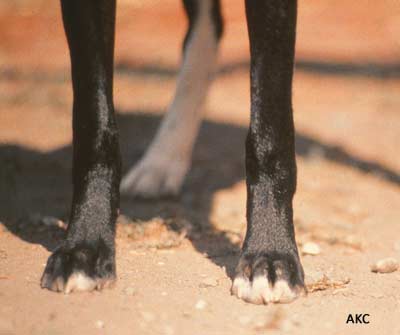
Here are photos of good feet from two angles. The oval shape and the thick pads are what is desired. The toes are well arched and close together. You should notice that the foot's width from the front should be about the same width as the leg bone.
Breeds calling for rounded leg bones have cat feet or rounded feet as shown in the photo of the Beagle on the left. Specialized sighthound breeds, such as the Borzoi shown in the two photos on the right above, call for long feet to increase their speed at the gallop. The long toes, some breeds even prefer longer toenails, are meant to grab the ground to propel the dog forward more efficiently at the gallop.
A flat foot or foot with a thin pad is much more likely to be injured making the dog lame and unable to hunt. The photos above show poor feet with thin pads and that are both flat and splayed.
The Basenji foot has a "thumb" on the inside of the pastern, which is called a dewclaw. The Standard mentions that "Dewclaws are usually removed." The logic for this practice is that the dewclaw is easily torn when the dog is working. However, dewclaw removal is optional and some breeders prefer to avoid this practice. A dog with dewclaws should not be penalized in the show ring.
Comments on Forequarters
The front assembly of the Basenji is complex and important. Correct forequarters add greatly to the dog's grace both standing still and moving. The ability of the dog to function with ease on the move depends on all the parts of the forequarters, as well as the rest of the dog's structure, being correct and working together.
Medium width, strong and muscular, hocks well let down and turned neither in nor out, with long second thighs and moderately bent stifles. Feet: Same as in "Forequarters."
Keeping in mind that the desire for moderation in Basenjis (as discussed in "Forequarters") is to produce a multi-purpose breed, let's now look at hindquarter construction.
Starting at the top the angle of the hip is very important to how the rear leg functions and that is introduced in the section called "Neck, Topline, Body" where a high set tail is called for. For a dog to have a high set tail it must also have a fairly flat pelvis.
When researching this subject it seems that most authors avoid giving actual, decisive numbers for the various angles in the rear leg. The pelvis itself doesn't have a convenient ridge along it, as the shoulder blade does, to use as a reference. Also the way the dog is standing at the moment, which is never quite the same, changes the angles too much to be decisive.
With the comments above in mind, consider the diagram above showing the skeletal representation of the structure of the hindquarters with the circle and red line indicating the angle laid out the same as those in the section "Forequarters." The inserted photo shows the same skeletal rear representation superimposed on a dog to help visualization.
The pelvis, unlike the shoulders in the forequarters, is attached to the spine and does not rotate. Its major job is to transfer the force generated by the rear action to the spine.
The correct pelvis appears to make a shelf behind the tail, which is clearly shown in the photo. The pelvis needs to be long as it is a major point of attachment for the muscle group making up the rear leg.
When a dog trots, it is the angle of the pelvis that determines how much the leg reaches under the body as compared to how much it extends out behind. The dog should reach under the body about the same as his other leg drives out behind the body. This should give the dog easy, efficient movement so that he does not tire as he hunts. The photo to the right demonstrates this.
If the pelvis is too flat, the action of the rear legs will be mostly behind the dog, which gives a very showy gait but not an efficient gait and thus is not desirable. If the pelvis is too steep, all the rear action is under the body. The rear leg is going to interfere quite a bit with the front leg, which requires the dog to compensate making the gait inefficient. This would mean the dog is working harder to travel the same distance, so again, this is incorrect.
Here is an example of a dog with a steep pelvis standing and on the move. She has compensated by moving with her rear higher than her withers and her rear foot is overtaking her front leg under her body. Expect to see more information on movement virtues and faults in the section on "Gait."'
Now commenting directly on the words in the Standard.
"Medium width" is referring to the view from the rear as shown to the below left.
The qualities of "strong and muscular" can be admired in the same photo of the red dog. The black dog above right demonstrates the strength and musculature of the rear from the side view.
"Hocks well let down" is an old time term that means the hock joint should be close to the ground or the hocks should be short not long. See photo of the black dog above to see well let down hocks. The desire for short hocks is based on the function of the breed as an enduring hunting dog. Long hocks appear in animals that need a short burst of speed, like say jackrabbits that only need to dart to their hole to survive another day. A coyote does not catch every rabbit but he is able to keep moving to take advantage when an opportunity arises. Animals that need to travel long distances fairly quickly and then have a reasonable burst of speed do best with short or well let down hocks.
Learn to look carefully at hocks and not be fooled by color markings when comparing dogs. Markings can be very deceiving. This is the same dog with correct well let down hocks photographed from opposite sides, but because of the markings the hocks do not seem the same.
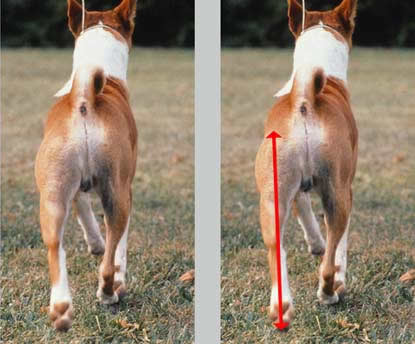
"And turned neither in nor out" is demonstrated in the photo of the red dog from the rear above with a red line added to show the column of support from the hip through the foot that makes the strongest rear. The straight column of support insures all the power from the rear in both the trot and the gallop is carried efficiently through the rear to make forward propulsion easy at both gaits
Most handlers learn how to stack their dogs to make the rear appear "turned neither in nor out". This is one of the reasons judges like to look at the dog, often walking around it when it is standing on its own. Seeing the dogs standing on their own is a better way to judge this feature. Photos above show a dog with cowhocks corrected to stand straight.
A fault that is sometimes a problem for Basenjis is the strength of the joint between the hock and the lower thigh. With the dog standing comfortably if one applies a small amount of pressure to this joint, the joint collapses forward and the dog steps forward to be more comfortable. This is a real weakness in the construction of the rear leg which reduces the functionality of the hock. Compare the faulty hock to the strong, correct hock shown in the photo to the far right in the series.
The "with long second thighs" can be seen in the skeleton to the right. It means the upper thigh and lower or second thighs are actually equal length but are both reasonably long to allow for good locomotion at both the trot and the gallop. Because the Basenji is a squarely-built short-coupled breed, great long rear legs would simply get entangled with the front under the body at a trot. But, because Basenjis are also a galloping breed, the bones need to be long enough to reach well forward at the gallop. See the photo to the left for the galloping position showing how the rear legs reach forward under the body. The rear legs' long bones are folded up in this position like a big coiled spring. The force in this coil is expended in forward movement as the dog vaults over the front leg.
It is the "and moderately bent stifle" that causes a great deal of disagreement among breeders. When the simple word "moderate" appears, each person tends to have a different opinion of what it means. One person's "moderate" is someone else's "way to straight." While another's person's perfect is another's terribly over-angulated.
Keep in mind that the model skeleton shown above right is offered as typical and moderate as requested in the standard. Looking at a couple of specialized breeds may clarify the differences. A specialized sighthound breed like the whippet has very long rear leg bones so when the hock is at its vertical position it is much further behind the dog. The extremely long bones, which are especially useful for galloping specialists, place the hocks in this position. At the other extreme the straight hind leg and stilted gait is said to be the hallmark of the Chow which is the most extreme breed at the other end of the spectrum. When in the vertical position, the Chow's hock is directly under the socket where the upper thigh joins the hip.
If one considers the complexity of the rear leg joints, one can understand how dogs of extremes, very straight or overly bent, apply extra stresses when the dog must withstand hunting for long hours. One realizes that extremes simply are not desirable on an all-purpose hound.
Take a look at these photos, which show a range of dogs that could be said to have "moderately bent stifle." If you look at several photos of the same dog, you will find that the rear does not always look the same. Do not fall in love with a photo. A clever handler can increase the apparent bend of stifle by how the dog's rear legs are set and then again, some dogs tend to straighten their rears creating the opposite affect, a dog that is actually better angulated than it appears in the photo.
Here are two rears that are too straight lacking bend of stifle, even moderate bend of stifle. Each appears to have weak hock joints as well.
One can only speak of the parts of a dog so long before the fact that all the parts have to interact becomes apparent. Beyond the bend of the stifle itself is the balance between the front and the rear leg assemblies. Because of the way the rear functions compared to the front at a gallop, the rear has more actual power than the front at the trot. However, one still does not want an extreme imbalance.
In these three photos the dog on the left is too straight in front and too bent, too angulated in the rear so is badly unbalanced with his straight front. The center dog is too straight in front but the rear is equally straight. The center dog would not have particularly easy movement but the rear would not overpower the front as much so the dog would hold up better on the field. The example on the right is a dog with proper angulation both in front and rear. This dog should have easy movement, which should carry him far at either the trot or the gallop. This is by far the most desirable example of the three dogs presented here.
The tricolor above demonstrates a good moving hindquarters that is balanced with the forequarters. The balance between the moderate forequarters and hindquarters strongly affects how each dog moves from every angle. Problems with conflict between the two ends of the dog will make a Basenji trot without the easy gait, "...the swift, effortless gait" that is desirable for the breed.
Coat short and fine. Skin very pliant. Color: Chestnut red; pure black; tricolor (pure black and chestnut red); or brindle (black stripes on a background of chestnut red); all with white feet, chest and tail tip. White legs, blaze and collar optional. The amount of white should never predominate over primary color. Color and markings should be rich, clear and well-defined, with a distinct line of demarcation between the black and red of tricolors and the stripes of brindles.
The overall quality of the skin and coat is described as: "Coat short and fine. Skin very pliant." There are several reasons these qualities are desirable. The short coat is the appropriate coat for the heat and humidity of the Basenji's native countries where the weather is generally hot and fairly humid. A short, fine coat is also useful in the dense bush where Basenjis actually hunt. The less their hair catches on plants, the better they will hunt.
The photo above was taken of a Basenji in Africa, you can enjoy the hunting bell but also notice the dense bush behind and around the dog, which is typical of what the dog travels through to drive game toward the hunters. The conditions in which Basenjis work also explain why it is important to have: "Skin very pliant" included in the description. A pliant skin does not tear easily in rough country protecting the dog from small injuries that can become major health concerns if left untended.
It is interesting to compare the types of skin different breeds have. For example the whippet has a very thin skin, which tears easily. A normal rough and tumble with a Basenji in play can cause tears in the skin of a whippet. Basenji skin is pliant and strong.
The pliant skin produces the Basenji's typical facial wrinkles as well as protecting them while they work.
Sometimes when a dog is out of coat, changing to a fresh new coat or has developed an undercoat because of cold weather, the coat is not as glossy as the photos above. The photo above is showing the coat at its best. For a Basenji fancier, there is nothing quite so pretty as the gleam of their colors in the bright sunlight.
Taking things a bit out of order here again: "Color and markings should be rich, clear and well-defined, with a distinct line of demarcation between the black and red of tricolors and the stripes of brindles." Below are some nice examples of Basenji colors. Each has clear color demarcation. The demarcation between red and black on the brindle is not like the stripes of a real tiger but they are clear enough to not be confused with a sable coat where the black is not formed into stripes.
Color-Chestnut red;
Color- ...pure black;
Color: ... tricolor (pure black and chestnut red);
Tricolors sometimes come with a bar across the red on the cheek. They are still within the standard's description of tricolor. The strength or width of the bar varies from fairly strong to quite faint. These are sometimes called barred tris. If a barred tri or a red carrying this type of tri gene is mated to a bitch who also carries the gene, a recessive black and white can be produced. Recessive black and whites tend to have tan hair intermingled in the black as they mature which is less desirable than pure black.
Note that the AKC has deemed that a tricolor with brindle marking showing in the red area should be considered a tricolor for the purposes of showing. Colloquially, most Basenji breeders call this color trindle. The photo above shows a brindle and a brindle patterned tri puppy. Some people think brindle is only on the cheeks patches of the trindle but this is incorrect. If you think of a regular tricolor as a red with a black overcoat then you can imagine the brindle tricolor as a brindle with a black overcoat. The brindle shows in all the regular places. The black overcoat which makes the tri-color pattern is genetically separate from the base color of red or brindle. They are separately inherited and are passed on to progeny independently of each other. Some breeders do not like the trindle variation but a good trindle has already won an all-breed best in show. They can be just as good overall as the other colors.
Color: ...or brindle (black stripes on a background of chestnut red);
At one point in time AKC asked the Basenji Club of America to provide a list of all the colors that have ever appeared in the breed. While the odd ones are not favored, they are also not disqualified as the breed has no disqualifications. In the future certified pedigrees from the AKC can include the actual color so will be more useful to breeders.
The requirements for white markings are the same for all the colors. "...all with white feet, chest and tail tip. White legs, blaze and collar optional. The amount of white should never predominate over primary color." Above are two dogs that are at the extremes in markings from quite flashy to rather plain. The amount of white is not something all breeders agree about. One person's too much is another's flashy. The definition of lacking white also varies. Especially when it comes to what is the absolute minimum or maximum.
Sometimes a pup is born with just a dash of white on one or more toes. Generally breeders prefer that at least the entire foot is white but it is important to realize this marking detail is a small part of being a Basenji. Unless you are consistently seeing lack of white, one dog is not likely to adversely affect your breeding program.
Markings can be deceptive. There are several places in other sections where this is pointed out. The apparent degree of shoulder layback can be improved or spoiled, the apparent length of the neck or the hocks can be altered and in moving sometimes where the white is can be a factor in appearance of faults.
Comment on Section
Keep perspective on the importance of color and markings. The standard describes the most desirable colors and markings but it also makes no disqualifications about color. It is your decision when you breed about how much emphasis you want to put on color and markings. Don't lightly give all the other breed qualities away to have the most attractively marked, brightest colored Basenjis.
Swift, tireless trot. Stride is long, smooth, effortless and the topline remains level. Coming and going, the straight column of bones from shoulder joint to foot and from hip joint to pad remains unbroken, converging toward the centerline under the body. The faster the trot, the greater the convergence.
Not so many words here but so difficult to get just right and so difficult for people to agree upon! "Swift, tireless trot. Stride is long, smooth, effortless and the topline remains level." Those few words paint a different picture for different breeders.
A dog at a trot is continuously moving over the ground with the legs on opposite sides working in unison. Ideally the front and the lateral rear leg hit the ground at the same time or the back leg hits the ground shortly after the diagonal front leg leaves the ground to allow a short suspension.
Basenji movement should look very easy and effortless. This type of movement requires coordination and balance between all the parts of the dog. Much of what makes a dog able to produce a proper trot is actually described in other parts of the standard, Forequarters, Hindquarters, Neck, Topline, Body. The force generated by the rear action is transferred along the spine propelling the dog over the forequarters to move it forward. A well constructed dog should be able to move tirelessly, smoothly with a level topline at a swift but not excessive speed. The dog's long stride will allow it to travel long distances with fewer steps.
The three videos below demonstrate the trot of a variety of basenjis. The dogs in the videos are not presented as exemplifying perfect movement; however the video shows much more than still photographs can and allows you to compare the added comments to each individual. These comments with the slow motion video will help you learn to evaluate basenjis at the trot.
The first video is of a young dog.
The second video is of a veteran bitch.
The third video of a veteran dog.
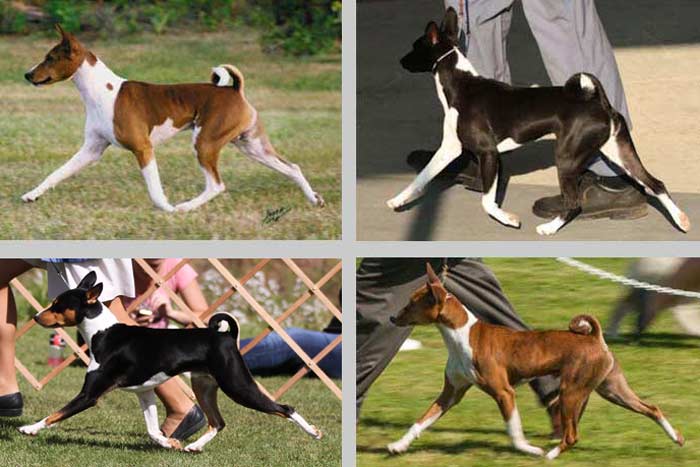
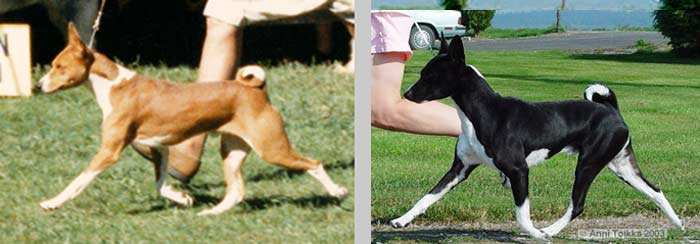
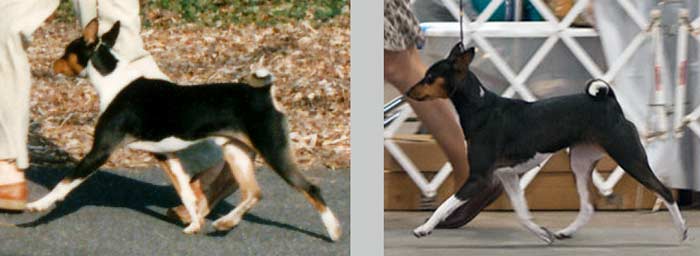
The dogs in the three videos are moving at good speeds. The trotting speed best for the majority of multi-purpose Basenjis is the collected trot not the as-fast-as-we-can-go trotting speed. Remember that a Basenji is a square dog that must also gallop. Its hindquarters are almost always more powerful than the forequarters to make a square dog that is also strong at a gallop. When dog and handler become excited in the show ring and move very fast, it is not unusual for the dog's hindquarter power to overcome the forequarters causing many movement faults. You might see a dog, viewed from front or rear that is side-winding caused by the rear leg reaching under the body so far that it interferes with the front leg forcing the dog to move at an angle to the line of travel. A very frequent result of lack of balance is the dog, viewed from the side, moving with the hindquarters higher than the forequarters. The better made and balanced a dog is the better the topline is on the move. This is why the standard specifically points out "the topline remains level." However, occasionally one sees a dog with a topline that remains level but makes up for its imbalance by a more lifting action in the forequarters than is desirable. Sometimes you see all these faults combined. The reason they are undesirable is that each of them increases stresses the dog is under and the work that it must do to trot. Words like "tireless..."smooth, effortless" in the Standard are trying to convey the image of a dog that can go long distances at the trot without wearing out. This ideal Basenji would still be ready for the final burst of speed at the gallop to finish the work of the hunt.
These words: "The wrinkled head is proudly carried on a well arched neck" are given in the "General Appearance" section of the Standard but should also be applied here in "Gait." The red dog on the left has a poor, low head carriage while the black dog on the right is moving with a correct head carriage. The black dog's head is carried up with a natural arch to its neck just as the standard describes.
Here are a couple of profile views of poor moving dogs to use for comparison. Both dogs are unsound, moving high behind. The dog on the left has obviously unequal length of stride front and rear. The rear leg is starting to reach inside the front leg under the body. The second dog has a short stride. A long stride is desirable because the dog will need to take fewer steps to travel the same distance thereby saving energy. Additionally you can see the front leg on this dog is bending at the elbow rather than have a strong line reaching from the shoulder blade through to the foot in the right side photo. These dogs might look better if slowed down. Or they just might not be constructed at all correctly.
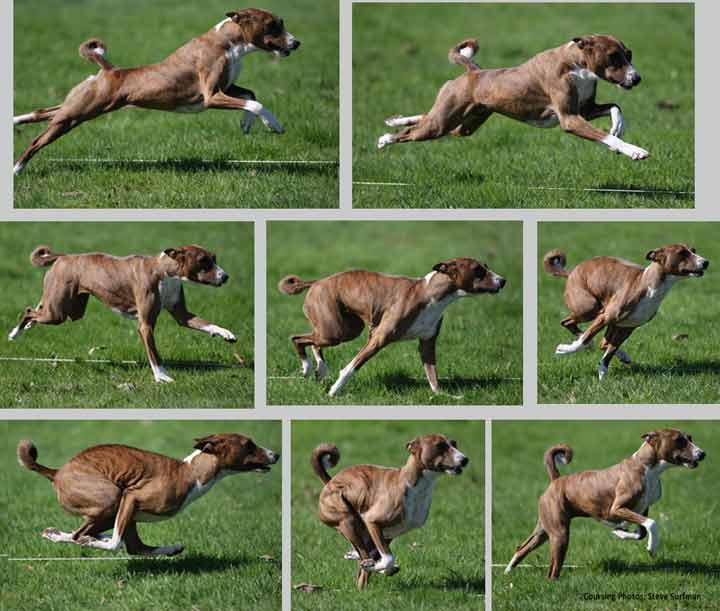
The Standard only describes the trot. We all know Basenjis also work at a gallop. Here is a good series of photos showing a Basenji on the coursing field. One can't help but notice how much the topline varies through the galloping stride. The dogs need both flexibility and strength in the topline. In the first and second photo in the second row you can see how all the force from the powerful hindquarters is being caught by that one front leg. And to think they are doing all this while twisting and turning after game. The gallop is a very strenuous gait.
The rest of this Standard section describes the Basenji's ideal gait as seen "coming" and "going:" "Coming and going, the straight column of bones from shoulder joint to foot and from hip joint to pad remains unbroken, converging toward the centerline under the body. The faster the trot, the greater the convergence."
"Coming and going" explains that this is the view of the dog coming directly toward or away from the viewer. The remainder of the Section is requesting a type of movement that is based on the best, most efficient way to trot. The objective is for the forward momentum or force of the trot be conveyed without loss of force, energy, momentum or causing undue stress on the dog.
Taking this Section a bit out of order since it is all too related to separate; the Section goes on to ask that the legs are "...converging toward the centerline under the body." The trot is a symmetric gait with the diagonal pairs of legs moving simultaneously. Some breeds with a low center of gravity or that are wider than Basenjis ask for a dog that moves with front and rear parallel. Basenjis, on the other hand, are like most moderate breeds of dogs that single track as their trotting speed increases. The reason for this is to make the movement easy. A dog that double tracks, or moves with limbs parallel will tend to roll at higher speeds thereby losing efficiency. The single tracking keeps the dog in balance as the weight is accepted by each diagonal pair of legs at the trot.
The photos below demonstrate the sentence "The faster the trot, the greater the convergence" clearly. The dog on the right is moving slower then the dog on the left and you can see the line the leg takes and the difference in convergence.
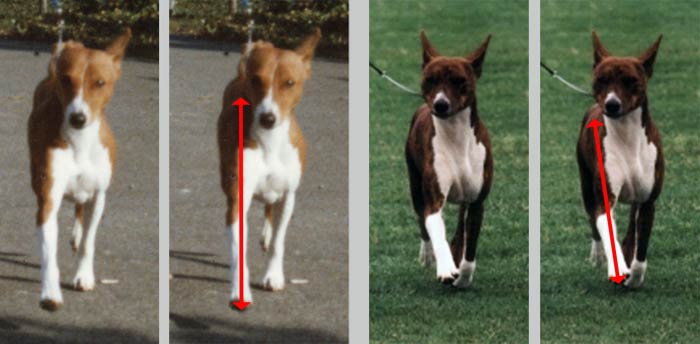
The two dogs above show "the straight column of bones from shoulder joint to foot" on a photo "coming" toward you. The photo to the right has that line of "the straight column of bones" superimposed.
A dog moving away above to show "...the straight column of bones...from hip joint to pad remains unbroken, converging toward the centerline under the body." The dog above displays clean movement. The photo on the right has a red line superimposed to demonstrate the straight line of support. Notice how the hocks are in that line as well.
Here are some dogs demonstrating a few movement faults that can be found in the coming and going view. The two photos at the left show a dog that is out at the elbow. You can see many faults from either coming or going as you do in these two photos. The middle dog is flipping a pastern instead of maintaining a clean line. Sometimes dogs that are very out of condition exacerbate this problem. The fourth dog is moving close behind. Notice how the hocks remain vertical instead of converging toward the center in an unbroken line. The dog in the right side photo is side winding or crabbing. The rear leg is reaching well inside the front leg forcing the dog to go at a slight angle. All unsound movement makes any dog less efficient on the move and takes away from the ease of its movement.
One hears the term "the dog is sound" or "...unsound" as the case may be. Often the term is particularly applied to movement as viewed in coming and going. Soundness in a dog on the move must be considered both coming and going and from the side view.
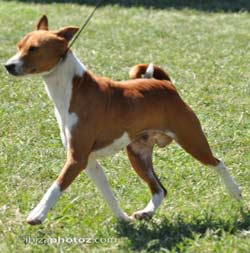
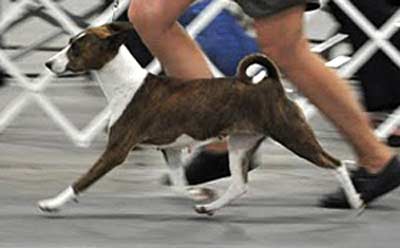
In the General Appearance section of the Standard there is this small bit on movement "...swift, effortless gait (resembling a racehorse trotting full out)". The straightforward natural trot, as compared to trained variations on the trot, is the gait that horses use to travel long distances. Walking is too slow and galloping too energy consuming. This natural trot requires a long, smooth, easy stride to be efficient. Another factor that makes the horse's trot easy is the time of suspension where all four feet are off the ground so the horse is gliding forward. The time of suspension allows the back foot to slide under the front foot to extend the length of the stride. We can also look for that in Basenjis as part of the ease of their effortless, horse-like full out trot as shown in the photo below.
Comment on Section
Although it is important to understand faults and how they affect gait, do not simply "fault judge" as the primary means of evaluating movement. First recognize merits, and then evaluate the dog's movement based on balancing the virtues against faults. To emphasize the importance of the positive consideration will allow you to maintain your dog's qualities while improving its faults when you breed.
Focus on the positive features of style, ease and efficiency in movement.
Swift, tireless trot. Stride is long, smooth, effortless and the topline remains level...
The videos and animations below demonstrate the trot of a variety of basenjis. The dogs in the videos are not presented as exemplifying perfect movement; however the video shows much more than still photographs can.
Because there are so many things to consider when evaluating movement, these videos of real basenji may get you started. Each one demonstrates good and not so good features.
The first three videos have comments and points to notice superimposed on the video. This is a chance to directly compare the important points of movement with a dog moving.
The first video is of a young dog.
The second video is of a veteran female.
The third video is of a veteran dog.
Eight additional dogs are featured below with animations, stills as well as slow and regular motion video of each. Some of them move better than others so this is an opportunity to evaluate as well as a chance to see how dogs of different builds might move. The step-by-step stills show the actual positions the dog takes in the trot.
The animation of each dog is followed by a short video in slow and regular motion so that it can be watched as many times as desired without going through the animations.
The Basenji Trot 4 is of a young male:
This is the video of The Basenji Trot 4 in slow and regular motion video so that it can be watched as many times as desired without going through the animations.
The Basenji Trot 5 is an older female.
This is the video of The Basenji Trot 5 in slow and regular motion video so that it can be watched as many times as desired without going through the animations.
The Basenji Trot 6 is an adult female.
This is the video of The Basenji Trot 6 in slow and regular motion video so that it can be watched as many times as desired without going through the animations.
The Basenji Trot 7 is an adult female.
This is the video of The Basenji Trot 7 in slow and regular motion video so that it can be watched as many times as desired without going through the animations.
The Basenji Trot 8 is an adult male.
This is the video of The Basenji Trot 8 in slow and regular motion video so that it can be watched as many times as desired without going through the animations.
The Basenji Trot 9 is an adult male.
This is the video of The Basenji Trot 9 in slow and regular motion video so that it can be watched as many times as desired without going through the animations.
The Basenji Trot 10 is an adult female.
This is the video of The Basenji Trot 10 in slow and regular motion video so that it can be watched as many times as desired without going through the animations.
The Basenji Trot 11 is a mature male.
This is the video of The Basenji Trot 11 in slow and regular motion video so that it can be watched as many times as desired without going through the animations.
Notes quoted from the Basenji Dissected on Gait:
A dog at a trot is continuously moving with the legs on opposite sides working in unison. Ideally the front and the lateral rear leg hit the ground at the same time or the back leg hits the ground shortly after the diagonal front leg leaves the ground to allow a short suspension.
Basenji movement should look very easy and effortless. This type of movement requires coordination and balance between all the parts of the dog. Much of what makes a dog able to produce a proper trot is actually described in other parts of the standard, Forequarters, Hindquarters, Neck, Topline, Body. The force generated by the rear action is transferred along the spine propelling the dog over the forequarters to move it forward. A well constructed dog should be able to move tirelessly, smoothly with a level topline at a swift but not excessive speed. The dog's long stride will allow it to travel long distances with fewer steps.
The trotting speed best for the majority of multi-purpose Basenjis is the collected trot not the as-fast-as-we-can-go trotting speed. Remember that a Basenji is a square dog that must also gallop. Its hindquarters are almost always more powerful than the forequarters to make a square dog that is also strong at a gallop. When dog and handler become excited in the show ring and move very fast, it is not unusual for the dog's hindquarter power to overcome the forequarters causing many movement faults. You might see a dog, viewed from front or rear that is side-winding caused by the rear leg reaching under the body so far that it interferes with the front leg forcing the dog to move at an angle to the line of travel. A very frequent result of lack of balance is the dog, viewed from the side, moving with the hindquarters higher than the forequarters. The better made and balanced a dog is the better the topline is on the move. This is why the standard specifically points out "the topline remains level." However, occasionally one sees a dog with a topline that remains level but makes up for its imbalance by a more lifting action in the forequarters than is desirable. Sometimes you see all these faults combined. The reason they are undesirable is that each of them increases stresses the dog is under and the work that it must do to trot. Words like "tireless..."smooth, effortless" in the Standard are trying to convey the image of a dog that can go long distances at the trot without wearing out. This ideal Basenji would still be ready for the final burst of speed at the gallop to finish the work of the hunt.
These words: "The wrinkled head is proudly carried on a well arched neck" are given in the "General Appearance" section of the Standard but should also be applied here in "Gait."
One hears the term "the dog is sound" or "...unsound" as the case may be. Often the term is particularly applied to movement as viewed in coming and going. Soundness in a dog on the move must be considered both coming and going and from the side view.
In the General Appearance section of the Standard there is this small bit on movement "...swift, effortless gait (resembling a racehorse trotting full out)". The straightforward natural trot, as compared to trained variations on the trot, is the gait that horses use to travel long distances. Walking is too slow and galloping too energy consuming. This natural trot requires a long, smooth, easy stride to be efficient. Another factor that makes the horse's trot easy is the time of suspension where all four feet are off the ground so the horse is gliding forward. The time of suspension allows the back foot to slide under the front foot to extend the length of the stride. We can also look for that in Basenjis as part of the ease of their effortless, horse-like full out trot as shown in the photo below.
An intelligent, independent, but affectionate and alert breed. Can be aloof with strangers.
The Basenji's temperament evolved with the breed's development over thousands of years as a hunting dog in central Africa. The Basenji had to be able to hunt, going out from the hunters to round up and drive game into the nets the people had strung though the forest. The Basenji's job was not to just follow instructions, but to be self-directed for the success of the dog-human team. This is the history behind the Standard's "An intelligent, independent...alert breed" description. The photo on the right shows a hunting team in Africa in 1987 with nets, spears, knives and the Basenji team member.
The innate intelligence also makes Basenjis successful in hunting in traditional gundog work, tracking and coursing. They are not specialists but they can do a good job in hunting situations. Their ability to course in a pack is good with their teamwork used to control and capture the prey.
Breeders should maintain that intelligence as an important breed characteristic. Basenjis should not become a fawning, submission type of dog. This would be untypical. However, this independence does not mean the dog is uninterested in the people on the team so the entire clause of the Standard is "An intelligent, independent, but affectionate and alert breed."
The photo above taken in Africa in 2010 demonstrates that Basenjis there, like Basenjis all around the globe, live with their team. They are affectionate to and appreciated by those who keep them.
"Can be aloof with strangers." is not always the case. They can be aloof and should not be penalized if they are. Aloof is something of a survival instinct: think before jumping in. It should never be exaggerated into shyness or aggression.
Some of the earliest breeding of Basenjis outside of Africa resulted in some unsavory temperaments. Breeders must always be alert for faulty temperament and keep in mind that in this day and age, the majority of Basenjis live within families and while maintaining their temperament breed type, the dogs must be solid with people to continue to be successful in the today's world.

The Basenji is a small, short haired hunting dog from Africa. It is short backed and lightly built, appearing high on the leg compared to its length. The wrinkled head is proudly carried on a well arched neck and the tail is set high and curled. Elegant and graceful, the whole demeanor is one of poise and inquiring alertness. The balanced structure and the smooth musculature enables it to move with ease and agility. The Basenji hunts by both sight and scent. Characteristics: The Basenji should not bark but is not mute. The wrinkled forehead, tightly curled tail and swift, effortless gait (resembling a racehorse trotting full out) are typical of the breed. Faults: Any departure from the following points must be considered a fault, and the seriousness with which the fault is regarded is to be in exact proportion to its degree.
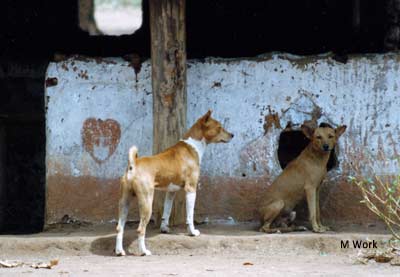
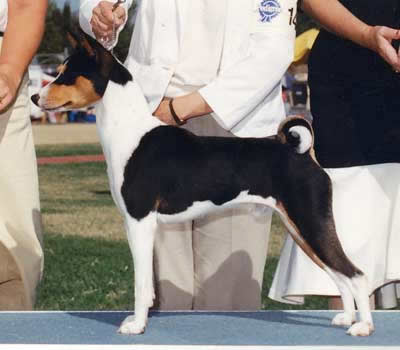
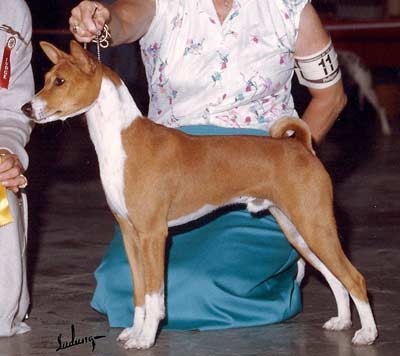
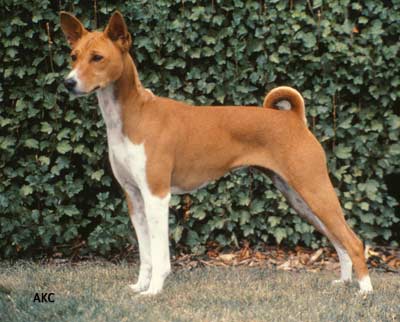
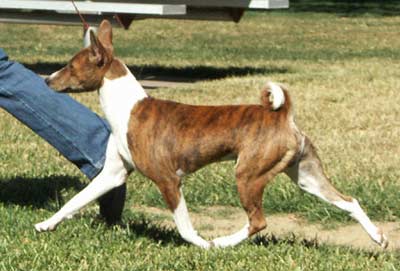
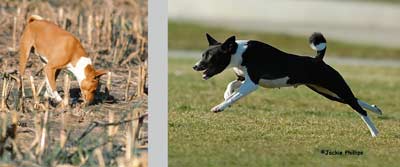
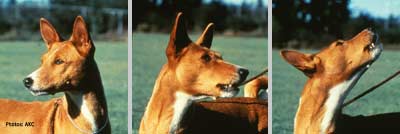
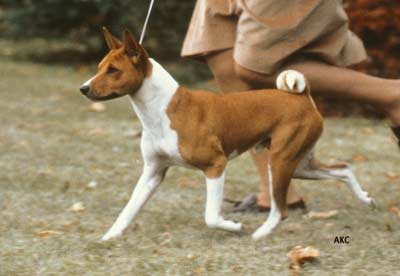
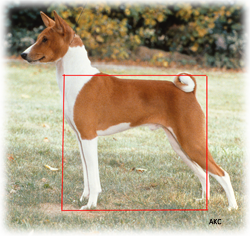
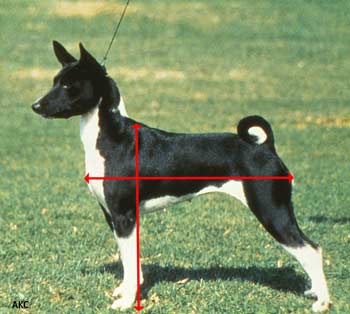
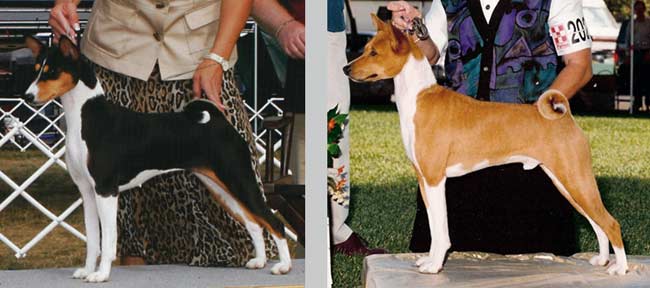
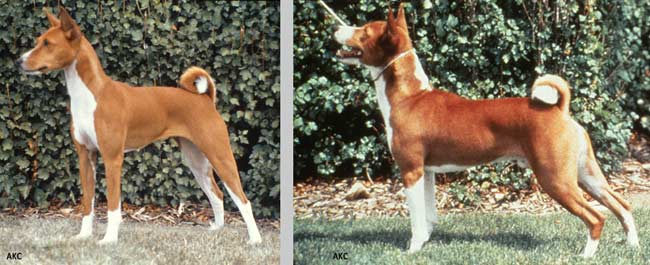
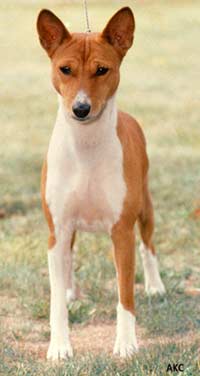
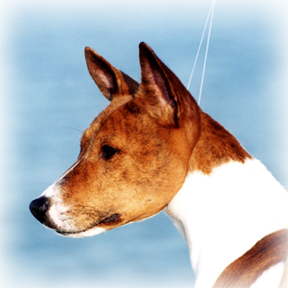 The head is proudly carried. Eyes: Dark hazel to dark brown, almond shaped, obliquely set and farseeing. Rims dark. Ears: Small, erect and slightly hooded, of fine texture and set well forward on top of head. The skull is flat, well chiseled and of medium width, tapering toward the eyes. The foreface tapers from eye to muzzle with a perceptible stop. Muzzle shorter than skull, neither coarse nor snipy, but with rounded cushions. Wrinkles appear upon the forehead when ears are erect, and are fine and profuse. Side wrinkles are desirable, but should never be exaggerated into dewlap. Wrinkles are most noticeable in puppies, and because of lack of shadowing, less noticeable in blacks, tricolors and brindles. Nose--Black greatly desired. Teeth: Evenly aligned with a scissors bite.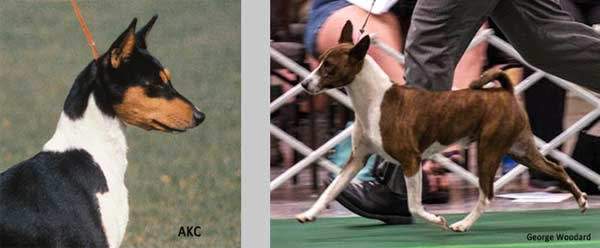
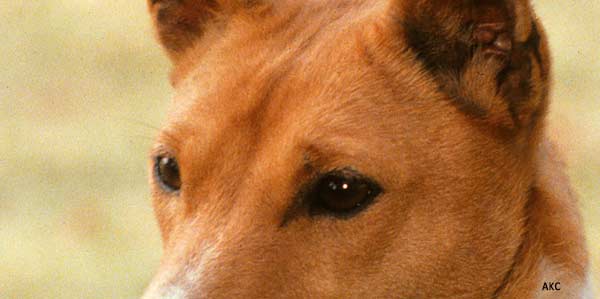
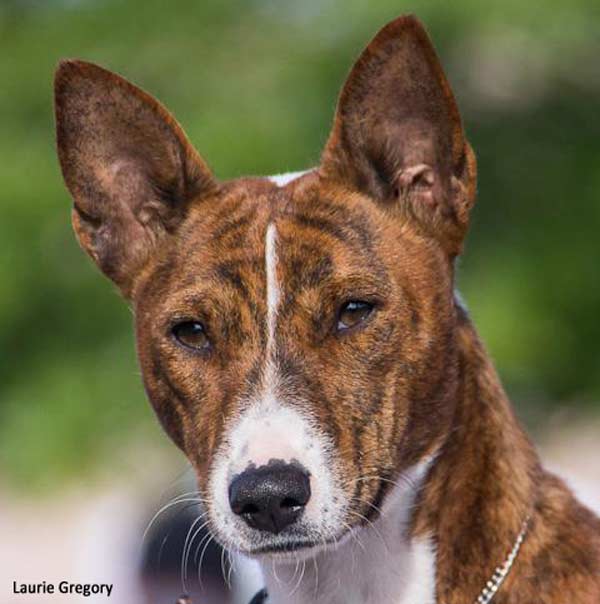
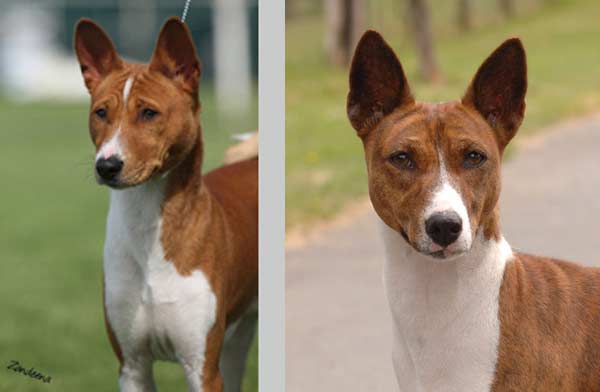
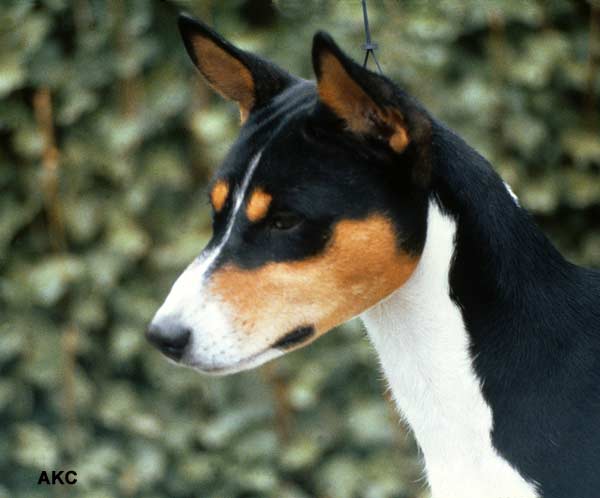
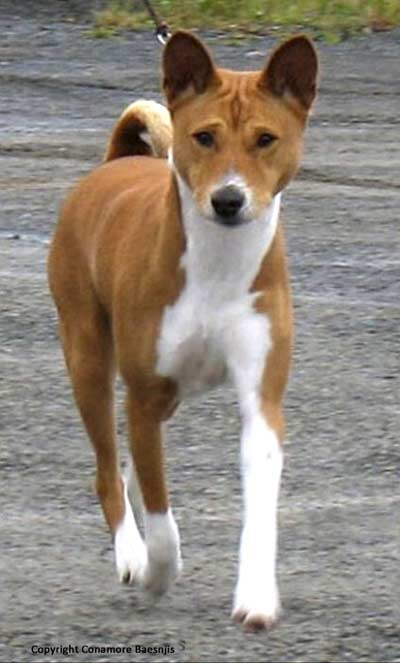
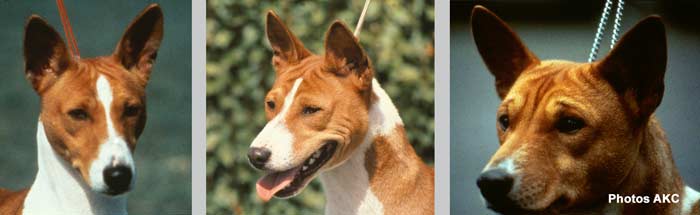
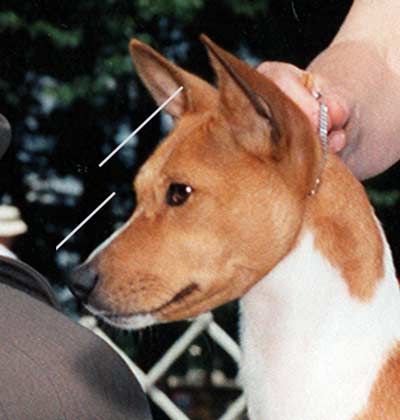
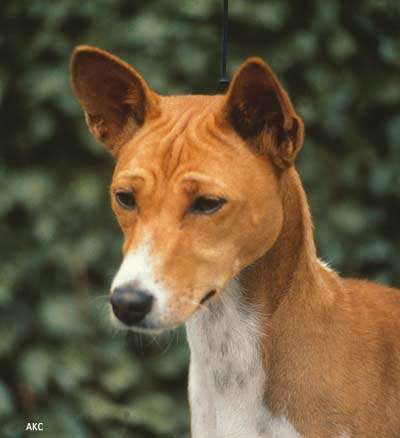
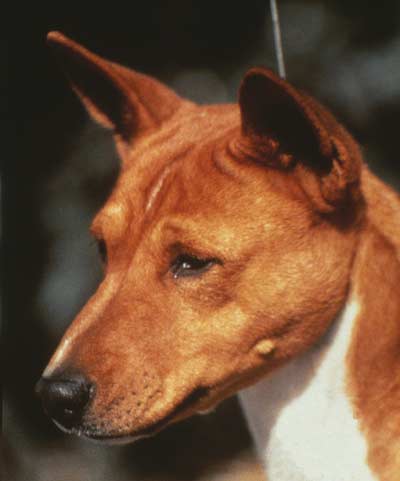
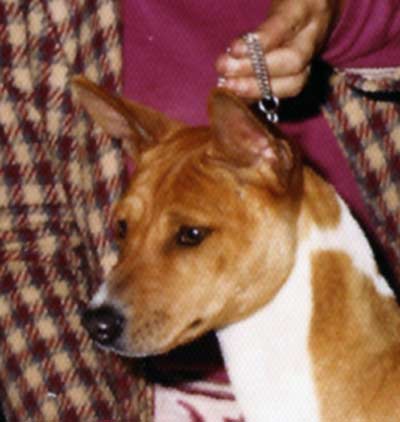
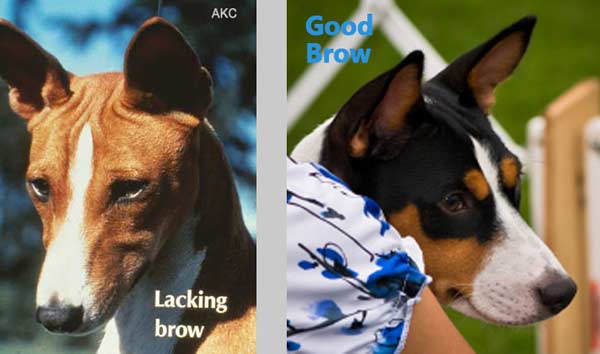
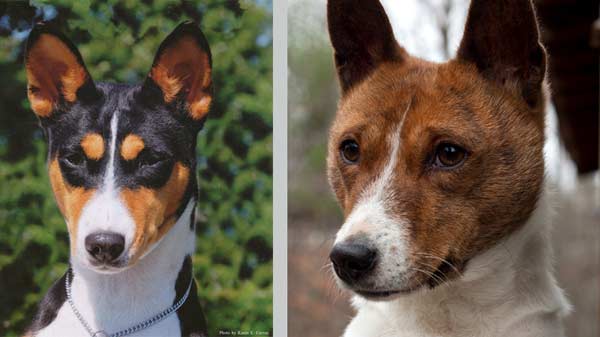
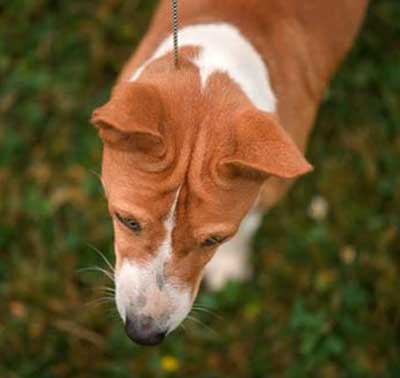
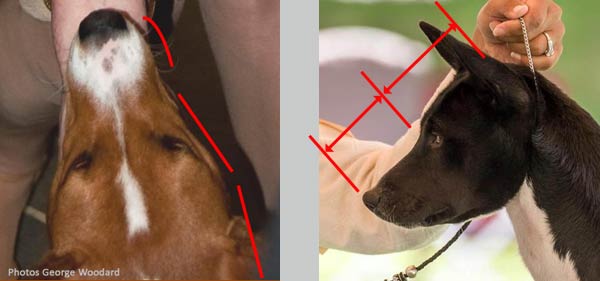
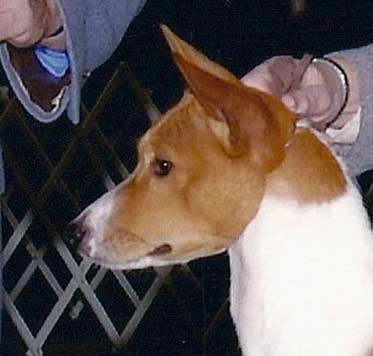
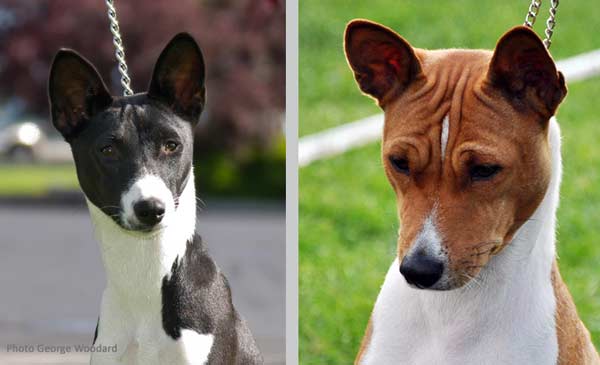
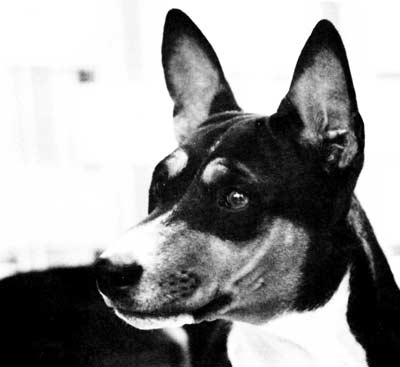
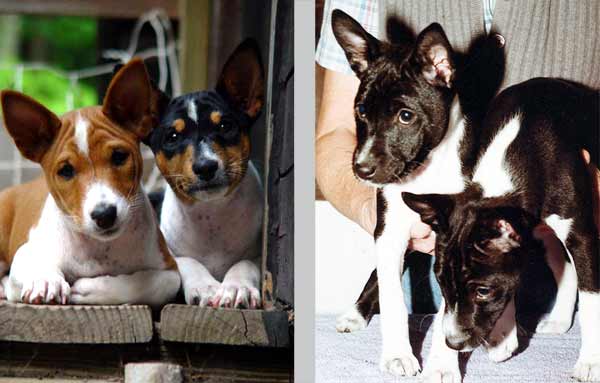
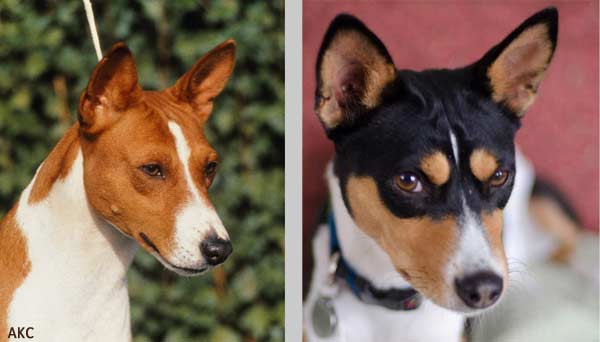
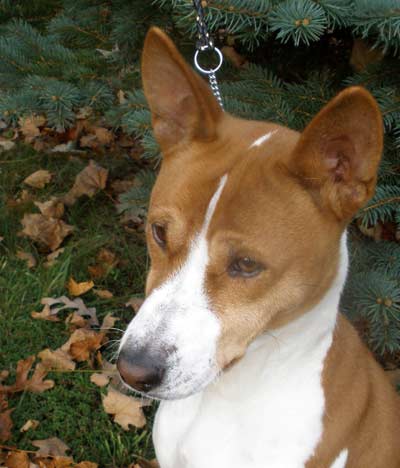
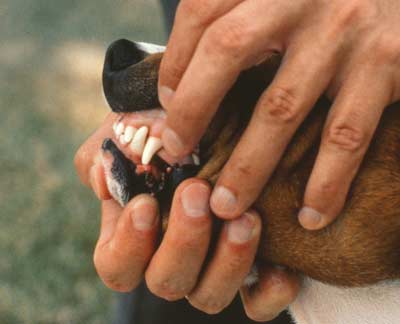
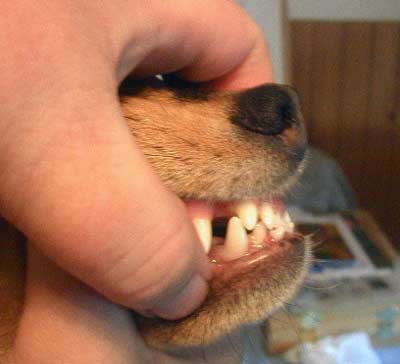
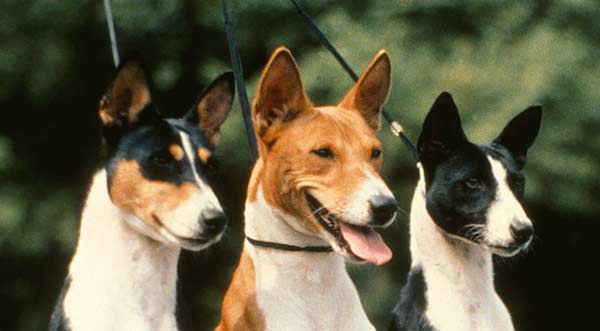
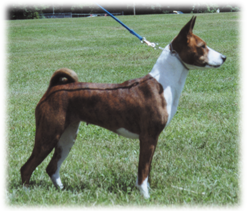 Neck of good length, well crested and slightly full at base of throat. Well set into shoulders. Topline: Back level. Body: Balanced with a short back, short coupled and ending in a definite waist. Ribs moderately sprung, deep to elbows and oval. Slight forechest in front of point of shoulder. Chest of medium width. Tail is set high on topline, bends acutely forward and lies well curled over to either side.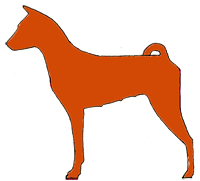
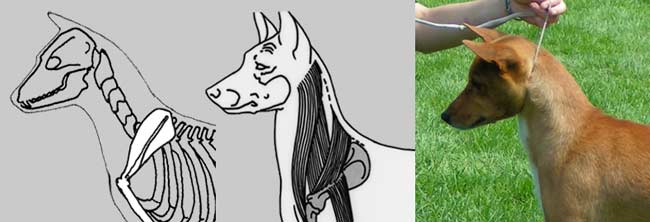
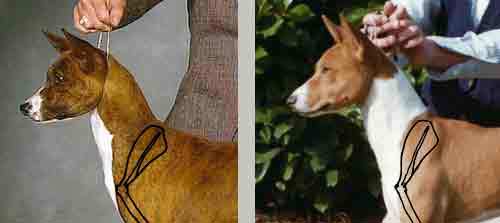
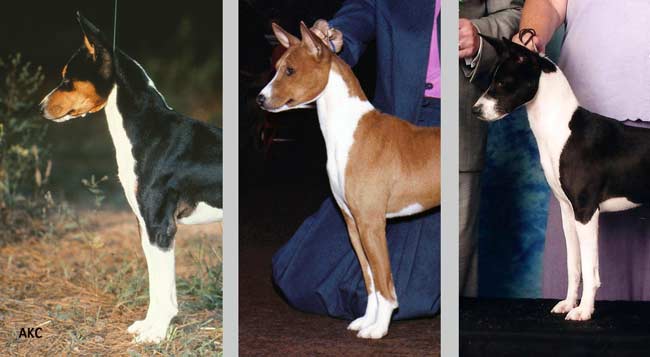
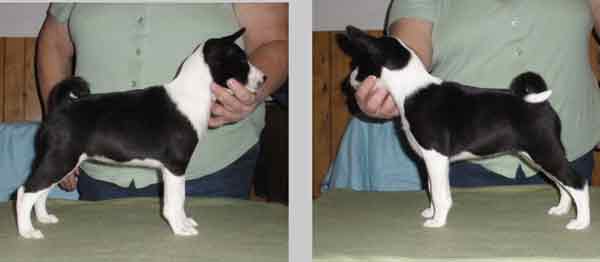
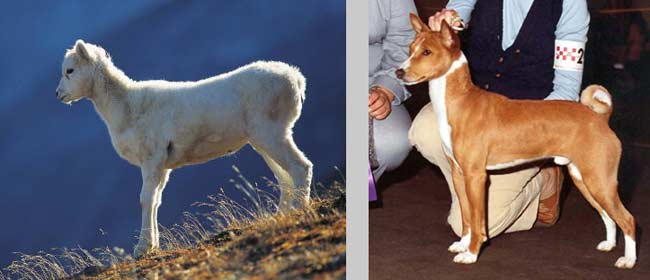
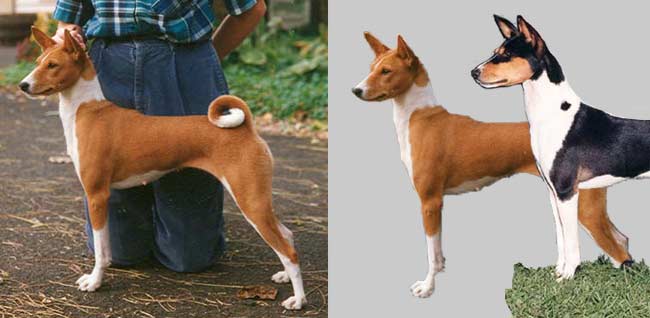
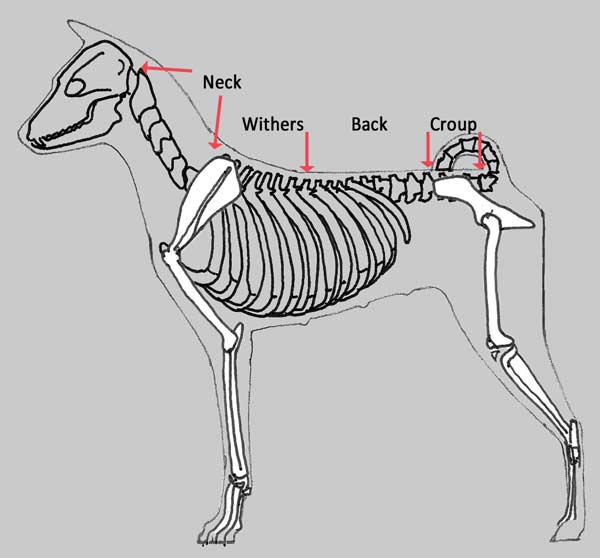
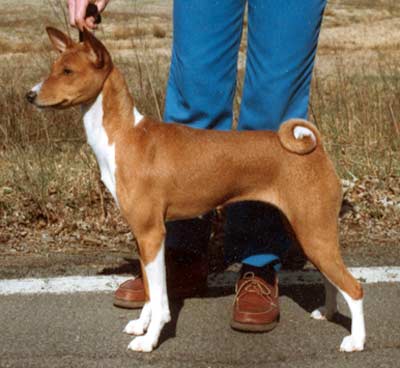
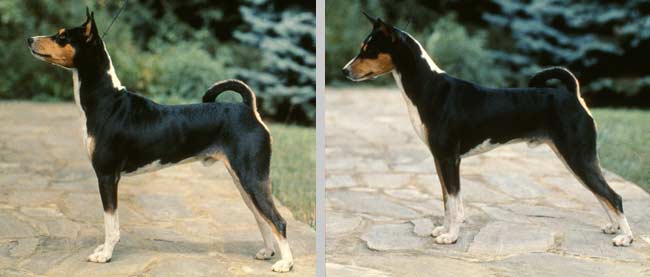
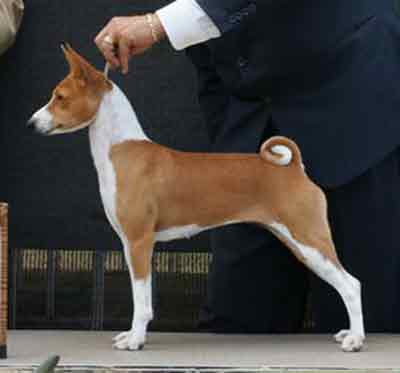
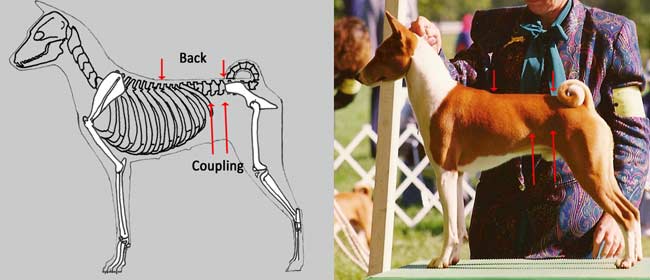
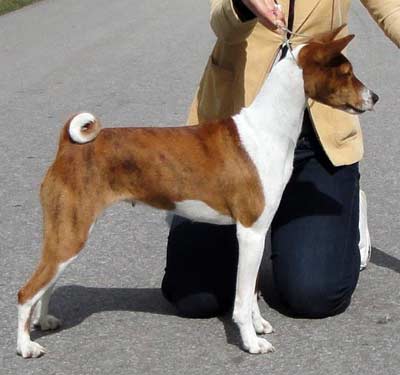
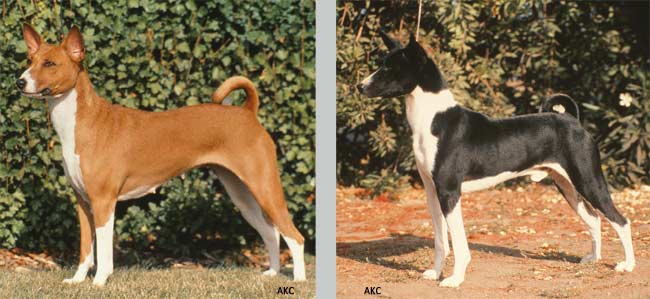
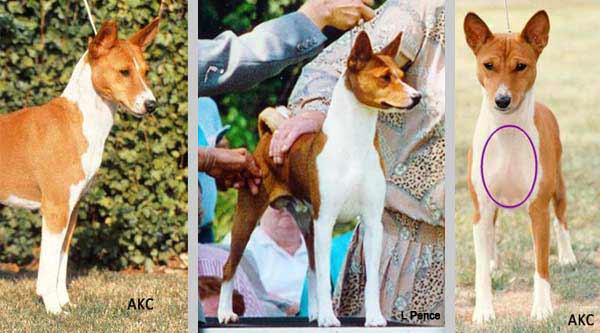
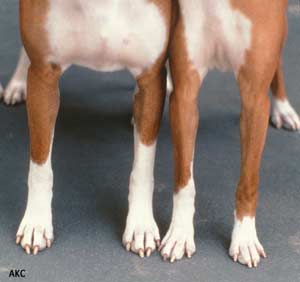
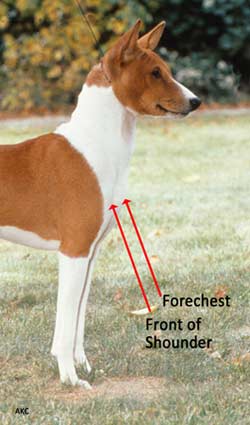
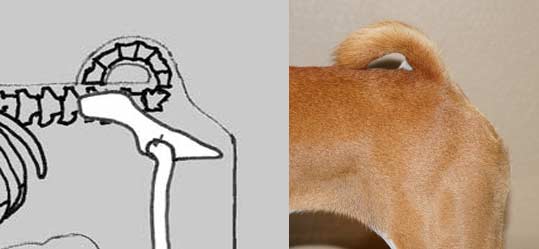
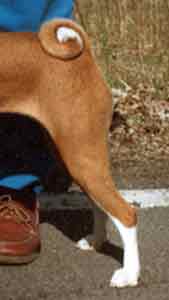
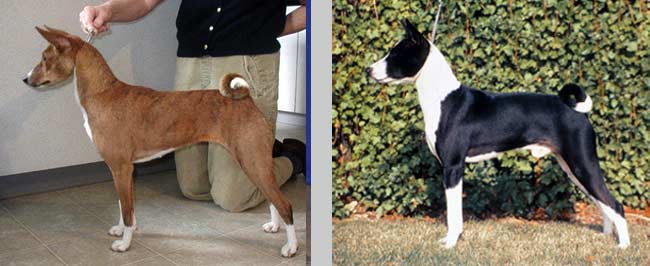
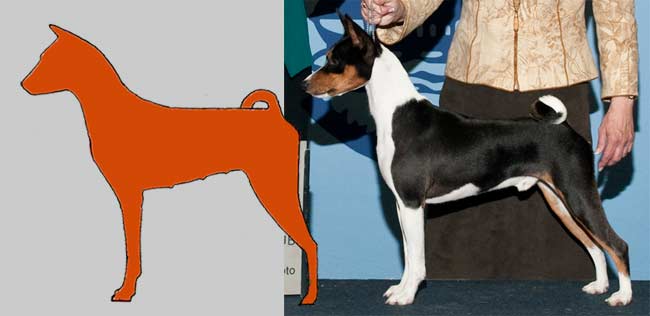
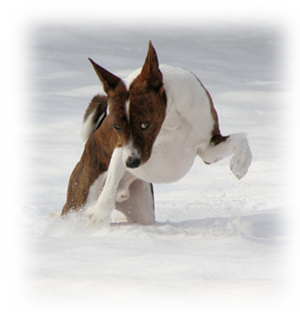
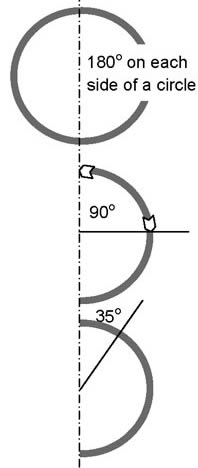
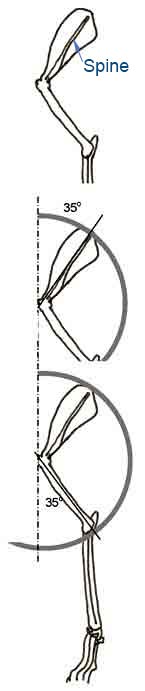
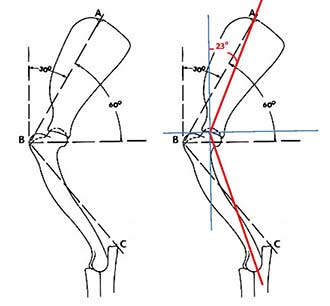
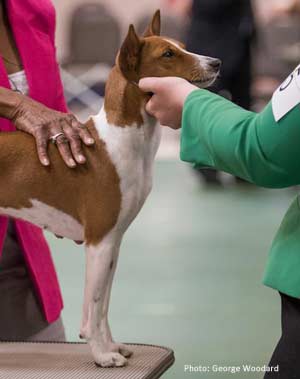
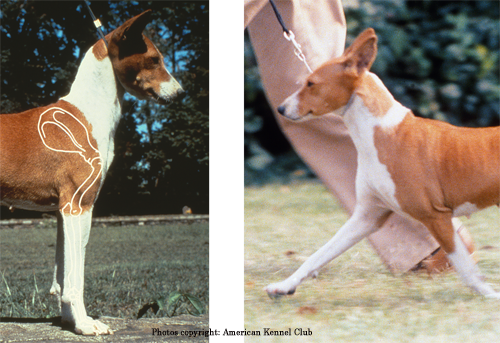
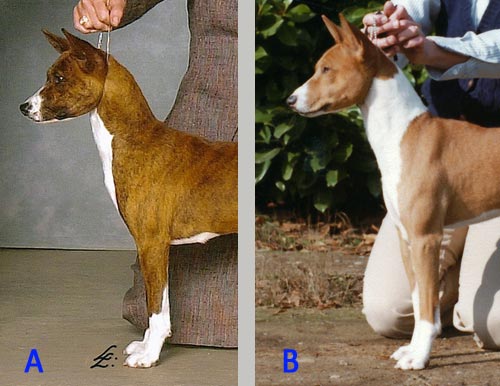
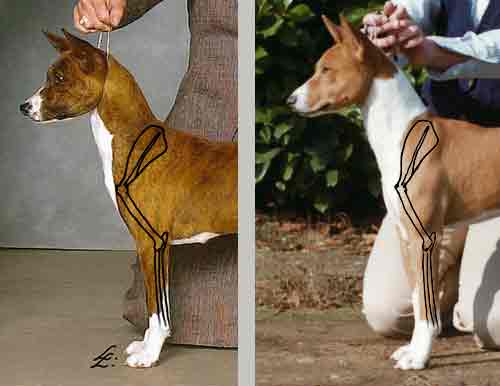
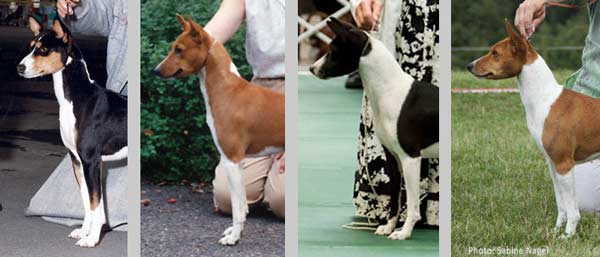
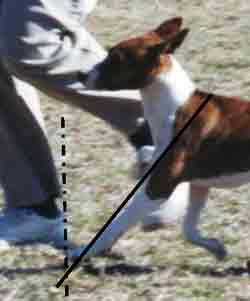
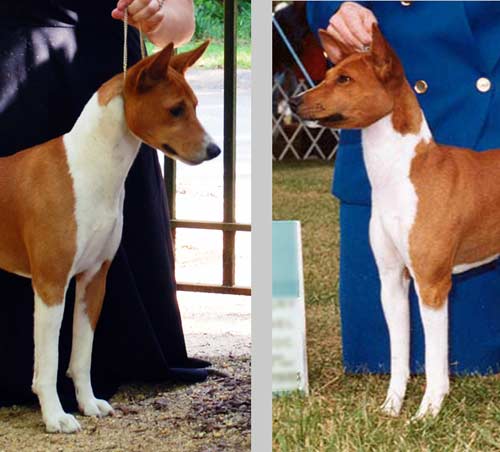
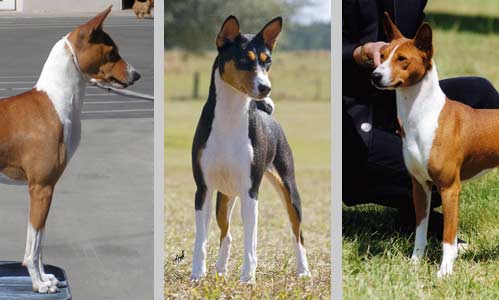
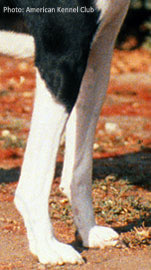
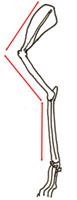
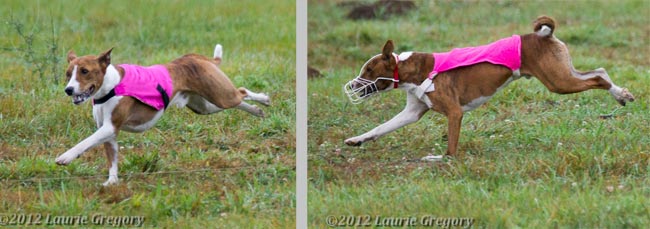
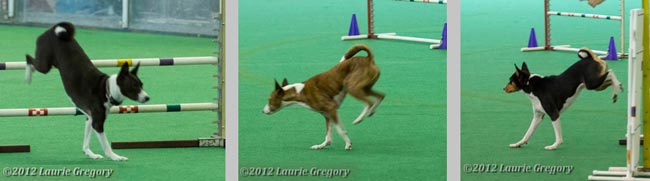
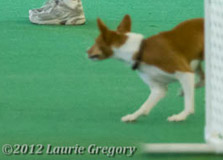
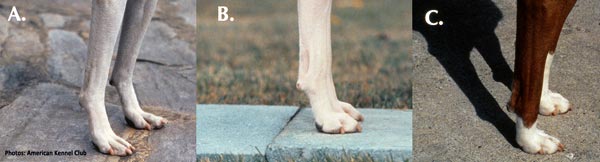
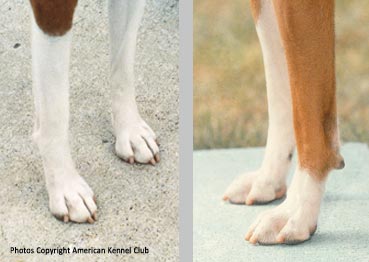
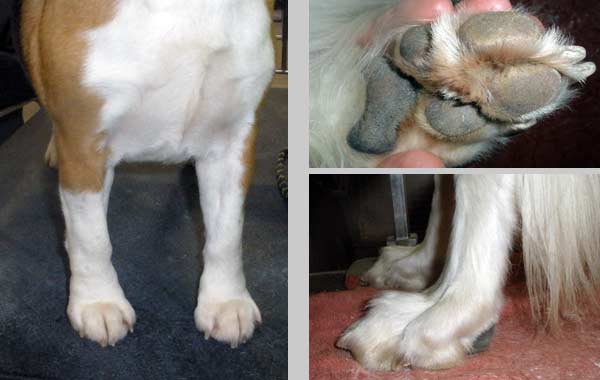
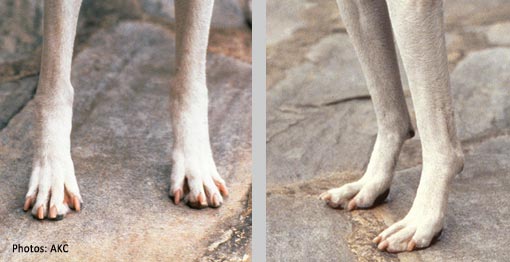
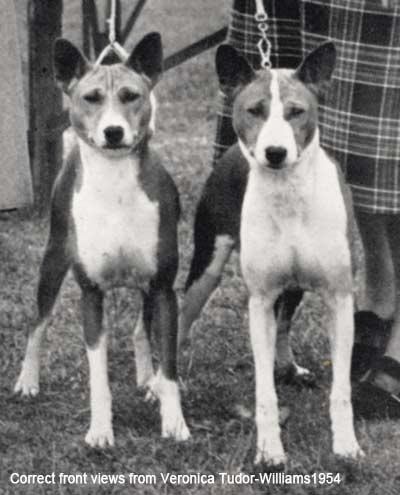
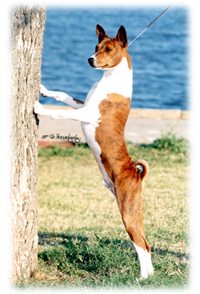
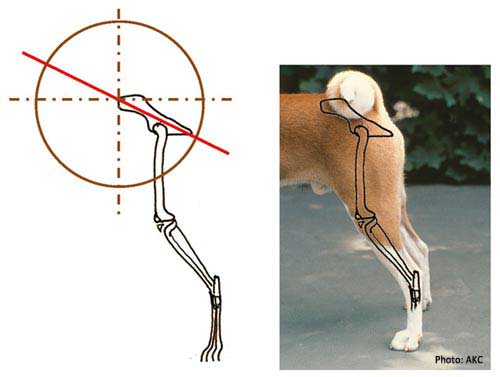
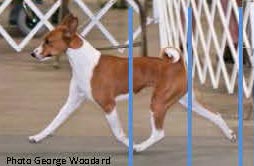
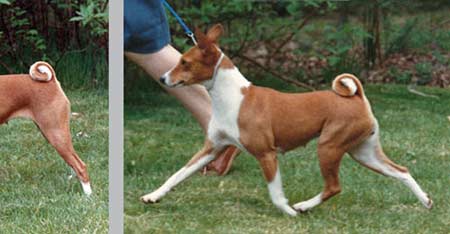
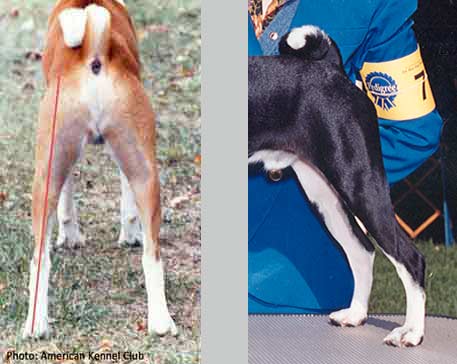
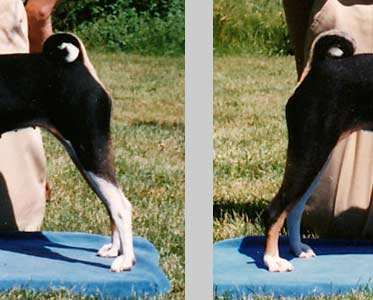
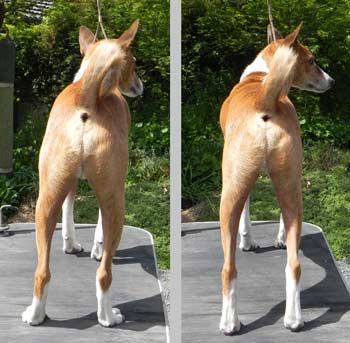
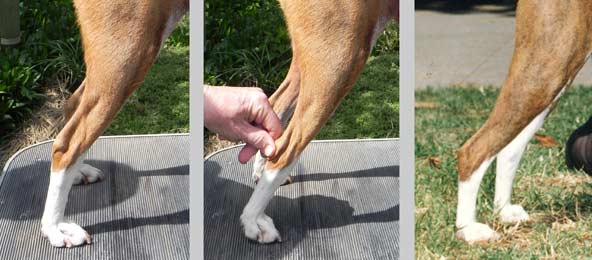
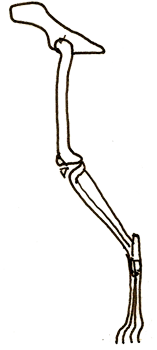
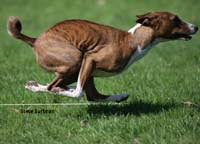
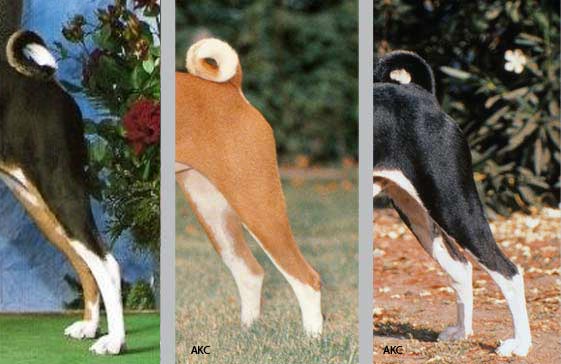
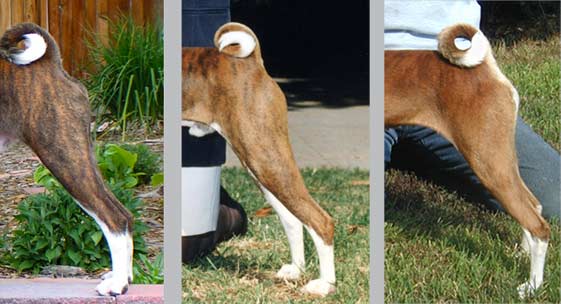
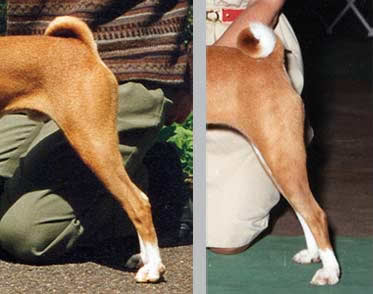
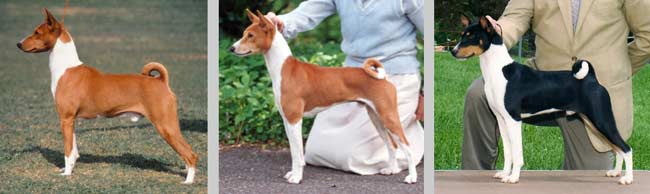
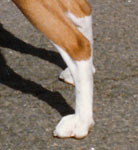
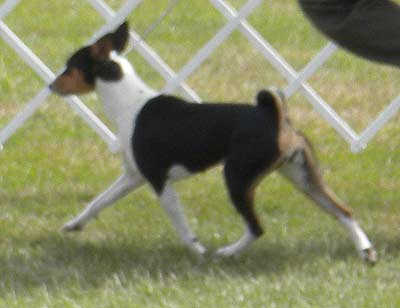
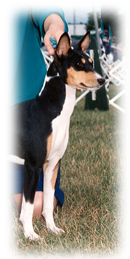 Coat short and fine. Skin very pliant.
 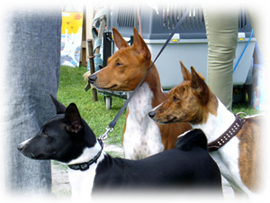 Color: Chestnut red; pure black; tricolor (pure black and chestnut red); or brindle (black stripes on a background of chestnut red); all with white feet, chest and tail tip. White legs, blaze and collar optional. The amount of white should never predominate over primary color. Color and markings should be rich, clear and well-defined, with a distinct line of demarcation between the black and red of tricolors and the stripes of brindles.