
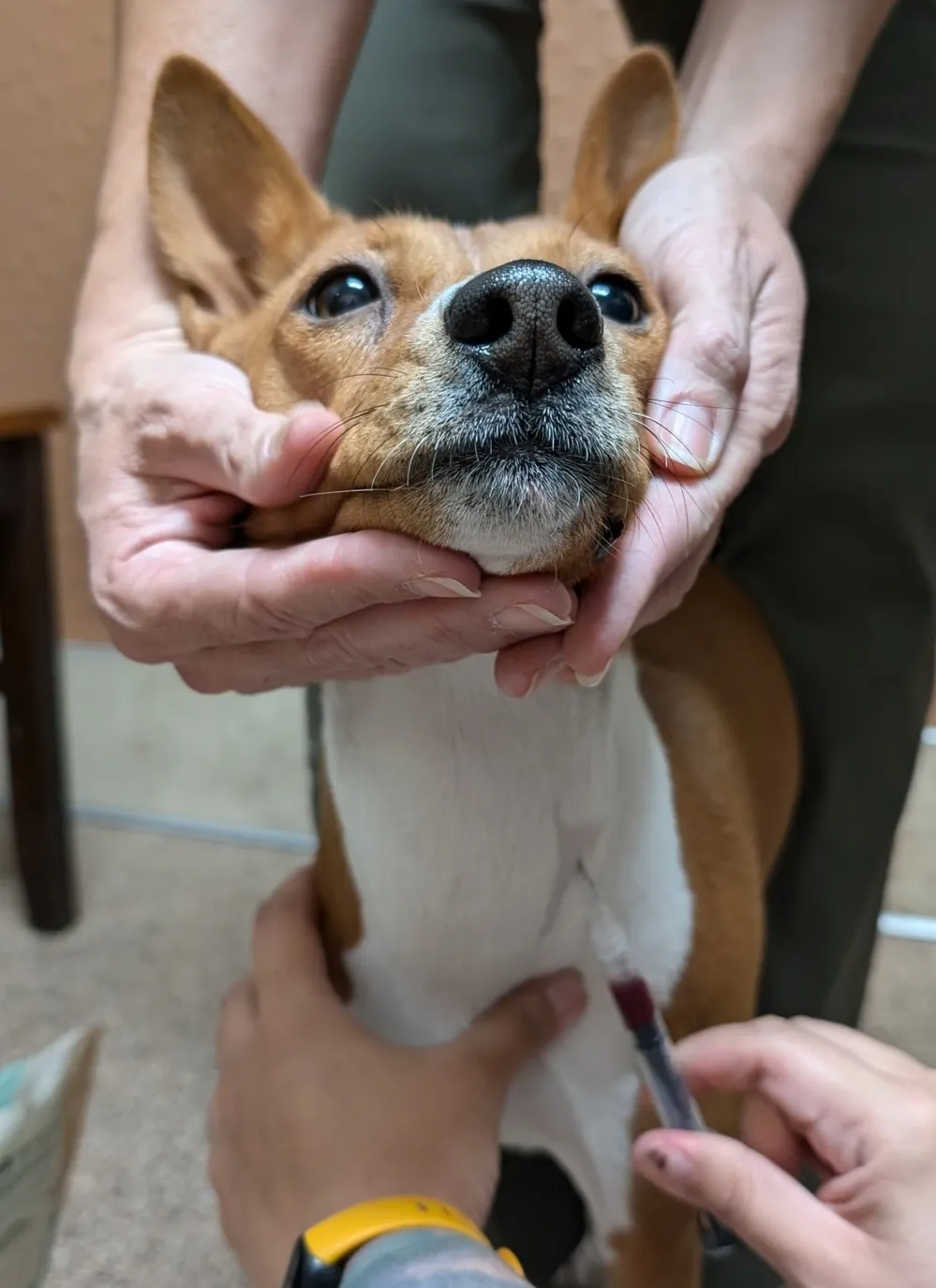
Recommended testing
If you are considering a basenji puppy, ask the breeder for these test results. If you breed, run them on every breeding dog and publish to the OFA database where possible.
- Fanconi Syndrome (DNA test) - Direct DNA test since 2011. Clear, Carrier, or Affected. OFA
- PRA-BJ1 (DNA test) - Covers about 50% of PRA cases in the breed. OFA
- Eyes / CAER (exam) - Yearly ACVO ophthalmologist exam; start at 7 weeks. OFA
- Thyroid (blood panel) - OFA panel at 12 months or older. Affected dogs should not be bred. OFA
- Hips and elbows (orthopedic) - Hip dysplasia is uncommon (about 3%). OFA or PennHIP. OFA
BCOA Health Statement
Approved by the BCOA Officers and Board of Directors in BCOA Ballot 2017-24. Effective 15 August 2017.
As a collective whole, the basenji is a very healthy breed. While there are two significant diseases, Progressive Retinal Atrophy (PRA) and Fanconi Syndrome, that have plagued the breed, careful, wise, responsible, and conscientious breeding, along with recent genetic testing, has pointedly diminished the occurrences of these diseases. Conscientious breeding continues to ensure an overall healthy basenji.
There are hereditary eye conditions that can occur throughout a basenji's lifespan. Regular examination by a veterinary ophthalmologist, a certified Diplomate of the American College of Veterinary Ophthalmologists (ACVO) is essential, beginning at 7 weeks of age. The results of all OFA Eye Certification Registry certificates should be available to potential breeders and people interested in a potential puppy. Basenjis with hereditary eye conditions, where the modes of inheritance are unknown, should be bred cautiously with the goal to reduce the occurrence in future generations.
DNA testing (Affected, Carrier, Clear). Affected dogs should not be used in a breeding program unless bred to a Clear, and only as a tool to keep a pedigree from potentially being lost and keep the additional genetic material in the gene pool. Carriers should be used only to Clears, for the same reasons. It is important to stress that a Carrier result be addressed responsibly.
Fanconi Syndrome is a condition in which the renal (kidney) tubules do not function properly. Instead of properly reabsorbing water, electrolytes, and nutrients into the body, the tubules spill them back into the urine to be expelled from the body. Untreated Fanconi Syndrome results in muscle wasting, acidosis, poor condition, and eventually death. With ongoing treatment using the Gonto Protocol, Fanconi basenjis in which the disease is caught early have, on average, the same lifespan as a non-Fanconi basenji.
Progressive Retinal Atrophy (PRA) in basenjis can cause progressive vision loss leading to blindness. One form caused by PRA-BJ1 accounts for approximately 50% of all PRA disease affecting basenjis. Due to the late onset of PRA, it is important to have the DNA test for PRA-BJ1 completed before breeding. The gene test is offered by multiple labs, including OFA and OptiGen. We suggest all breeders and owners list their results on the OFA website.
Descendants of basenjis where both parents have DNA-tested clear may be declared genetically free of Fanconi and PRA-BJ1. Even though errors in DNA testing are extremely rare, further testing for the first generation should be considered for breeding stock.
Hip dysplasia occurs in a very small percentage of basenjis. As of December 2016, basenjis ranked 159 of 175 of all breeds with more than 100 cases; of basenjis tested, only 3.34% were abnormal. If a breeder chooses to evaluate for hip dysplasia, X-rays should be read and registered with an accredited agency such as PennHIP or the Orthopedic Foundation for Animals. Results should be readily available to anyone considering breeding or a potential puppy.
Hypothyroidism occurs in a very small percentage of basenjis (5.38% of dogs tested as of December 2016). It can result from autoimmune thyroiditis. The OFA has an open registry for dogs tested for autoimmune thyroiditis at 12 months or older using approved laboratories. Basenjis with autoimmune thyroiditis should not be bred.
Conditions reference
Click any condition for the full detail. Each section covers what the condition is, what testing exists for it, and the recommendation for owners and for breeders.
-
Genetic testing in basenjis
What is DNA? Deoxyribonucleic Acid (DNA) is made up of nucleotides (A, G, C, T). The order of these nucleotides codes the instructions for building a living organism.
What is a mutation? DNA is copied every time a cell divides. Sometimes an error occurs in the process. If this happens in germ cells (eggs or sperm), the mutation can pass to offspring. Most mutations do not cause disease, but some do.
Inheritance of genetic diseases. Every individual has two copies of every gene, one from each parent. Dominant mutations need only one copy of the defective gene to cause disease; simple recessives need two; some inheritance is polygenic or X-linked or has variable expression. Some mutations only express when triggered by environmental factors.
DNA tests available for basenjis:
- Fanconi Syndrome: Direct DNA test available since 2011 via OFA. Results: Normal, Carrier, or Affected.
- Progressive Retinal Atrophy (PRA-BJ1): DNA test for one form of PRA. Autosomal recessive. Results: Normal, Carrier, or Affected.
- Hemolytic Anemia (Pyruvate Kinase Deficiency): First DNA test available to basenji breeders. Most basenjis today are descended from tested-normal stock.
Tests use a cheek-cell swab, frozen sperm, or blood sample.
-
Cystinuria
Production of urine is the normal process by which a dog's kidneys filter liquid waste from the body. If there is a problem with this process, certain amino acids and minerals can build up, forming crystals which can clump together as stones in the ureter or bladder. Stone types include struvite, calcium oxalate, urate, or cystine.
In most breeds including basenjis, struvite stones are the most common and usually form in response to an infection like a UTI.
Cystinuria is the inherited error of metabolism that keeps the renal tubules from properly reabsorbing the amino acid cystine. The kidneys cannot correctly process cystine, so excess cystine is excreted into the urine where it crystallizes and forms stones. These can block the ureter, which is a veterinary emergency.
Symptoms typically appear at 2 to 7 years of age. The mode of inheritance in affected basenjis has not yet been identified. Cystinuria cannot be cured but can be managed by doubling urine volume through hydration, dietary restrictions, and drug therapy.
For the owner
The first symptom of a urinary blockage in male dogs is often: frequent urination, straining to urinate, small amounts of urine rather than a steady stream, visible blood, a weak stream, or sudden incontinence in a previously housebroken male. If your male basenji shows these signs, contact your veterinarian immediately. Diagnosis can be made by basic urinalysis, the nitroprusside test at the University of Pennsylvania, or urine amino acid quantitation. More info available through your veterinarian or the OFA.
For the breeder
There is no treatment for the genetic defect. Knowing the condition's history in your dog's vertical and horizontal pedigree is the only method for evaluating risk. Affected dogs should not be used for breeding.
-
Eye health (Coloboma, Corneal Dystrophy, PPM, PRA)
Regular eye examinations matter because some hereditary eye conditions are diagnosed as puppies and some occur later in life. In the United States, have your basenji examined by a veterinary ophthalmologist board-certified by the American College of Veterinary Ophthalmologists (ACVO). These exams are recommended at 9 weeks, then annually for breeding stock throughout their reproductive lives, and every other year thereafter.
A Normal result from an eye examination does not guarantee the dog will not later develop a hereditary eye problem. The OFA Eye Certification Registry exam is part of the CHIC list of health tests for basenjis.
Coloboma
Coloboma is an inherited condition in which part of the eye does not develop properly. Basenjis typically have an optic nerve coloboma; it does not progress with age. Mode of inheritance is unknown. Basenji eyes sometimes have a unique appearance that can produce a false-positive diagnosis; if a basenji is diagnosed with a coloboma, a second opinion from an ophthalmologist familiar with basenji eyes is recommended.
For owners: Most basenjis with colobomas lead a normal life. For breeders: ACVO recommends not breeding dogs with colobomas; they will not receive OFA Eye Certification.
Corneal Dystrophy
The cornea has three layers: epithelial (outer), stromal (middle), and endothelial (inner). Each type of corneal dystrophy affects a different layer.
Epithelial corneal dystrophy causes shallow, painful erosions in the outer layer. Symptoms include tearing, squinting, and rubbing the eye. May be mechanical injury or genetic if chronic and recurring.
Stromal corneal dystrophy appears as tiny whitish lipid spots on one or both eyes. Generally causes no discomfort and does not affect vision. Treatment not usually necessary.
Endothelial corneal dystrophy is the most serious type and may be genetic. The endothelium cannot regulate water, causing corneal swelling that can progress to painful ulcers. ACVO recommends not breeding dogs with endothelial corneal dystrophy.
Persistent Pupillary Membrane (PPM)
A normal fetal membrane in the eye that does not completely reabsorb after birth. Should be assessed by an ophthalmologist at about 9 weeks of age. Examples:
- Iris-to-iris strands (mildest; passes OFA Eye exam)
- Iris-to-lens strands (does not pass)
- Iris-to-cornea strands (does not pass)
- Iris sheets (most severe, rare in basenjis; does not pass)
Most PPM has no effect on a dog's life. Severe PPM is rare but can cause vision loss. Most basenji breeders will not disqualify a dog from breeding solely due to mild PPM.
Progressive Retinal Atrophy (PRA)
Inherited eye disease causing progressive vision loss leading to blindness. There are at least two forms of PRA in basenjis. PRA-BJ1 has a gene test (available since March 2013) and accounts for about 50% of PRA cases. The other form(s) have no genetic test yet.
Symptoms typically begin at 5 to 8 years or older, starting with difficulty seeing at night and progressing to daytime vision loss. There is no treatment or cure. Basenjis adapt to vision loss; with a stable, predictable environment they can have a high quality of life even with significant vision loss.
The PRA-BJ1 test is part of the CHIC list. Available at OFA and OptiGen. We encourage all results to be listed on the OFA website.
For owners: Insist that breeders test for PRA-BJ1. At least one parent must be Clear/Normal. Both parents should have been examined by an ACVO-certified ophthalmologist within the year prior to breeding.
For breeders: All breeding stock should be tested. At least one parent in any litter should test Clear/Normal. Breeding stock should also be examined annually by an ophthalmologist to detect the non-BJ1 form(s) of PRA. Dogs diagnosed with PRA but not affected with PRA-BJ1 should not be used for breeding.
-
Fanconi Syndrome
Fanconi Syndrome is an inherited disease in which the kidneys do not properly reabsorb electrolytes and nutrients, instead spilling them into the urine. Symptoms include excessive drinking (polydipsia), excessive urination (polyuria), and glucose in the urine (glucosuria). Untreated, it causes muscle wasting, acidosis, poor condition, and eventually kidney failure.
With early diagnosis and treatment using the Gonto Protocol, affected basenjis can have a nearly normal lifespan.
The OFA Fanconi DNA test identifies dogs as Normal/Clear, Carrier, or Affected. Fanconi is inherited as an autosomal recessive. Carriers will not develop the disease but can pass the mutation to offspring.
The Fanconi gene test is part of the CHIC list of health tests for basenjis.
Fanconi Treatment Protocol
In 1990 (updated 2003 and 2012) Dr. Steve Gonto developed a treatment protocol based on therapies used for human Fanconi patients. The protocol uses dietary supplements for acid neutralization and replacement of lost electrolytes and nutrients via bicarbonate and other supplements at specified doses. Dr. Gonto was given lifetime BCOA membership in recognition of this work. The protocol was studied and validated for the veterinary literature by Jennifer Yearley, DVM. It controls the disease but does not cure it.
Download the Fanconi Protocol (PDF)
Urine Strip Testing
Urine glucose test strips (not blood test strips, the kind used by diabetics) are inexpensive and sold at most pharmacies. Place the strip in the basenji's urine stream and read per the strip instructions. If you cannot catch it in the stream, use a pie pan, ladle, or spoon. A positive result suggests possible Fanconi but is not a definitive diagnosis; follow up with your vet for a blood glucose test. See also Question 10 in the Fanconi FAQ below.
For the owner
Insist that at least one parent of any puppy you buy be DNA-tested Normal/Clear for Fanconi using the current gene test. Pets can be DNA tested to verify a Fanconi diagnosis or assess likelihood. Owners of Affected dogs and dogs of unknown status should periodically strip-test for glucose in the urine starting as early as age 1 year. Because elevated urine glucose also occurs with diabetes, Fanconi is often misdiagnosed; a combination of urine glucose with normal or low blood glucose strongly suggests Fanconi.
For the breeder
All breeding stock (sire and dam) should be DNA-tested using the current direct test. Results from the older Linked Marker Test (2007 to August 2011) should not be used for breeding decisions. Any planned litter should have at least one Clear/Normal parent to eliminate the chance of producing Affected puppies.
-
Pyruvate Kinase Deficiency (Hemolytic Anemia)
First diagnosed in basenjis in the 1960s. Research began that decade and a DNA test is available. The inherited form is now extremely rare. PK-deficient HA is different from idiopathic autoimmune hemolytic anemia (IAHA), the non-inherited form that occurs in all breeds. Because the inherited form is now so rare, the non-inherited form is the likelier cause of any hemolytic anemia in basenjis today.
Affected dogs may faint, have low energy, very white gums and mucous membranes, and light "golden" colored stools. Affected dogs typically die by age 2, with 4 being the outside limit of survival.
For the owner
The disorder has been virtually eliminated from the breed and testing has been largely discontinued. A definitive diagnosis can be made by DNA test to rule out PK-deficient HA.
For the breeder
Most basenjis today are descended from tested-normal stock, but a few carriers still exist in the gene pool. Use only dogs descended from tested-normal stock or dogs that have themselves been tested. All recent imports from Africa were DNA tested prior to inclusion in the AKC studbook.
-
Hip Dysplasia
Hip dysplasia (HD) is a complex hereditary condition in which the hip socket is badly formed, often leading to lameness and arthritis. It is believed to be polygenic with environmental factors involved in its expression. According to the OFA, the basenji ranks 157 of 172 breeds in HD incidence. Of 2,651 hip evaluations performed by OFA between January 1974 and December 2013, 23% were rated Excellent and 3.5% were rated Dysplastic.
For the owner
When buying a puppy, the parents should have been X-rayed for HD and the films read by the OFA. Results are at ofa.org/advanced-search. Your breeder should be able to point you at the parents' results.
For the breeder
Breeding stock should be X-rayed for hip dysplasia. The OFA web site allows downloads and searches for dogs that passed with Fair, Good, or Excellent. The OFA also has an open registry that publishes Borderline and Dysplastic ratings. Good and Excellent are the preferred grades for breeding stock; Fair is not considered dysplastic but is borderline. Affected or untested animals should never be used for breeding. OFA status at 2 years is generally considered definitive, with a small chance of becoming dysplastic later. PennHIP results can be included in the OFA database.
-
IPSID and Exocrine Pancreatic Insufficiency (EPI)
Immuno-Proliferative Small Intestinal Disease (IPSID) is also known as Basenji Enteropathy, Immunoproliferative Lymphoplasmacytic Enteritis, Basenji Diarrheal Syndrome, and malabsorption. It is a type of inflammatory bowel disease (IBD) that prevents proper absorption of nutrients. A predisposition to IPSID is inherited, but inheritance appears to be only one of the factors; physical or emotional stress may be aggravating triggers.
Exocrine Pancreatic Insufficiency (EPI) can be confused with IPSID but the treatment is very different. EPI occurs when the exocrine glands in the pancreas atrophy and can no longer produce or secrete pancreatic digestive enzymes. Without treatment EPI can lead to malnourishment, starvation, or organ failure.
EPI should be ruled out before a diagnosis of IPSID is made. EPI is confirmed with a TLI (Trypsin-Like Immunoreactivity) blood test. See epi4dogs.com.
For the owner
IPSID symptoms can include diarrhea, vomiting, weight loss, increased or decreased appetite, gas, and depression. EPI symptoms are similar but typically include weight loss despite a strong appetite, greasy yellow stools, diarrhea, vomiting, and personality changes. Both conditions cycle through good and bad periods. Diagnosing IPSID involves eliminating other causes; intestinal biopsy is the only reliable diagnosis. Traditional treatment includes systemic prednisone and antibiotics; long-term plans need a veterinarian. EPI treatment includes enzyme supplementation (porcine or plant-based) and dietary changes, sometimes with B12 (cobalamin) and antibiotics.
For the breeder
Dogs with IPSID or EPI should not be used for breeding. While the mode of inheritance is not known, susceptibility (rather than direct inheritance) may be involved.
-
Patellar Luxation
Patellar luxation occurs when the kneecap pops out of place. As of December 2013, 0.9% of basenjis evaluated were reported Affected by the OFA.
For the owner
Patellar luxation can be diagnosed by a veterinarian.
For the breeder
The OFA has an open registry for dogs whose patellas have been evaluated at 12 months or older. The exam is non-invasive and inexpensive. Patellar luxation is suspected to be heritable, though the mode of inheritance is unknown.
-
Thyroid Problems
The thyroid glands secrete and regulate hormones responsible for metabolism. Thyroid disease in dogs is most often hypothyroid (underactive). One form of hypothyroidism is caused by autoimmune thyroiditis and is inherited; idiopathic thyroid gland atrophy can also occur. Hypothyroidism is easily controlled with medication.
Symptoms can include weight gain without increased appetite, symmetrical hair loss and poor coat, ear and skin changes (dryness, chronic bacterial infections, thickening), lethargy and lack of interest in activity, and behavioral changes including aggression.
A comprehensive thyroid panel should include:
- Total thyroxine (T4 or TT4)
- Thyroid-stimulating hormone (TSH)
- Free T4 (FT4) by equilibrium dialysis
- Canine Thyroglobulin Autoantibody (cTGAA or TAA)
Elevated TgAA levels are used to diagnose autoimmune thyroiditis. Basenjis typically have a lower TT4 reference range than other breeds; TT4 must be analyzed with TSH (Seavers et al., Australian Veterinary Journal, 2008).
Autoimmune thyroiditis tends to become symptomatic at 2 to 5 years. Dogs negative at age 1 may become positive at 6. Annual testing is recommended for the first 4 years, then every other year. The OFA has an open registry for dogs tested at 12 months or older using approved labs.
For the owner
Hypothyroidism may be treated with a thyroid supplement under veterinary supervision, with periodic dosage adjustment.
For the breeder
Periodic testing of breeding stock from early adulthood is recommended, primarily to rule out autoimmune thyroiditis. A thyroid wellness test before a bitch's heat cycle is suggested; thyroid imbalance often occurs after whelping. For puppies, the first wellness panel should be 3 months after the first heat.
-
Umbilical and Inguinal Hernias
Umbilical hernias are very common in basenjis; most are minor and do not cause problems. Inguinal hernias are uncommon but can be serious. Both types are hereditary.
For the owner
Umbilical hernias can be repaired at any time, often during spay or neuter. Small closed hernias generally do not cause problems; large or open ones can if a loop of intestine gets caught. Dogs with repaired umbilical hernias remain eligible for AKC conformation. Inguinal hernias generally require surgical repair; dogs with repaired inguinal hernias are not eligible for AKC conformation.
For the breeder
Small closed umbilical hernias generally are not an issue for breeding, although selection away from them is desirable. The use of individuals with large or open hernias should be carefully considered.
Fanconi DNA Test FAQ
Prepared by the BCOA Health and Research Committee and approved by the Basenji Health Endowment Board of Directors in 2011.
The most common inherited lethal disease in basenjis is Fanconi Syndrome, a kidney defect that does not become apparent until the dog is old enough to have had offspring. In 2007, researchers developed a linked-analysis test to identify which dogs were likely to develop or pass on the Fanconi gene mutation. In August 2011, Dr. Gary Johnson DVM PhD and Fabiana Faria of the Department of Veterinary Pathobiology at the University of Missouri (Columbia, MO) discovered the specific DNA mutation that identifies the Fanconi Syndrome gene. The direct DNA Fanconi Test is now available from the OFA and replaces the Linked Marker Test.
-
1. Who should test, and why?
Responsible breeders test all potential breeding stock before breeding decisions are made and share the results and implications with puppy buyers. Owners should want to know their dog's Fanconi gene status as part of a general health program. The direct DNA Fanconi Test can reveal the potential for disease before symptoms appear; early detection and treatment may extend and improve the affected dog's life. Owners of dogs without direct DNA test results for both parents (such as rescues) are strongly encouraged to test.
This direct DNA Fanconi test is offered only through the Orthopedic Foundation for Animals. The OFA has a Clear-by-Parentage Policy: for direct mutant gene tests, OFA will issue clearances to untested offspring if both parents have been DNA tested Clear, the results have been OFA registered, and all three (sire, dam, offspring) have been DNA-identity profiled and parentage verified. Only first-generation offspring qualify. Details: OFA policies.
-
2. How do I test my basenji?
The direct Fanconi DNA test is available through the OFA. Cheek swab samples spread on an FTA (Fast Technology for Analysis of nucleic acids) sample collection card replace blood samples. The cheek swab is safe, non-invasive, and can be done at home; no veterinary appointment is necessary.
FTA card instructions: OFA FTA card instructions.
Test ordering: OFA Fanconi DNA.
Note: The OFA site has two Fanconi options. "Fanconi DNA" ($65) is for dogs not previously tested with the Linked Marker Test. "Fanconi Retest" ($50) is only for dogs previously tested with the Linked Marker Test, and the Basenji Health Endowment subsidizes each retest by $15. Be sure registration number, name, and birth date match the original Linked Marker certificate.
-
3. If my dog was tested with the linked test, does it need to be re-tested?
If you are going to breed your dog, yes, retest with the direct DNA Fanconi test. If you have bred to an animal previously tested with the Linked Marker Test, retest to confirm the prior results. Because the Linked Marker Test has an inherent possibility of misclassification, all animals that have been bred or will be bred should be retested with the direct test. You may want to retest even if you never intend to breed, to confirm your animal's true Fanconi gene status.
-
4. How do I order a re-test on a previously-tested animal?
Order through the OFA website. See Question 2 above.
-
5. Can frozen semen be tested for Fanconi?
The lab at the University of Missouri can extract DNA from semen but needs two semen straws and still may not get usable DNA. Handling instructions at canine-epilepsy.net/forms.html.
Alternatively, a breeder could use untested frozen semen from a deceased sire provided the bitch has tested Clear/Normal. If the semen donor were Affected, all puppies would be expected to be Carriers.
-
6. What do the test results mean?
Each basenji is genetically either Clear/Normal, a Carrier, or Affected for Fanconi Syndrome.
Normal: the dog does not have the mutated Fanconi gene. The genes inherited from both parents do not contain the mutation. This dog will not get sick from inherited basenji Fanconi Syndrome and cannot pass on the mutated gene.
Carrier: the dog inherited a mutated Fanconi gene from one parent and a normal gene from the other. The dog will probably never develop clinical Fanconi (which generally requires two mutated copies). However, this dog can produce the disease in offspring if bred to another Carrier or to an Affected.
Affected: the dog has two copies of the mutated Fanconi gene, one from each parent. This does not mean the dog is sick now, but Affected dogs are at high risk of developing Fanconi Syndrome at some point. Owners need to be especially vigilant; the earlier the disease is caught and treated, the better the prognosis.
If your dog tests Affected, start strip-testing the urine for glucose every two weeks from age 1 to 2 years and continue for life. Take the Fanconi information to your vet so it is on hand before it is needed. Ask about a venous blood gas test, which can indicate disease onset even before glucose appears in urine. A daily nutritional supplement and filtered water are recommended.
-
7. What does Fanconi test status mean for breeding decisions?
Our goal as responsible stewards of the basenji breed is to eliminate Fanconi Syndrome as an inherited disease without losing valuable genetic diversity. Breedings that have the potential to produce Fanconi-affected offspring are strongly discouraged. Before any breeding, both parents should have been tested, and at least one should have tested Clear/Normal. When using frozen semen from a deceased untested sire, the dam should have tested Clear/Normal.
-
8. What should I do if I get an anomalous Fanconi test result?
If the result does not fit within the range expected from your dog's parentage, notify Dr. Johnson's laboratory and a member of the BCOA Health and Research Committee. Examples of anomalous results: Carrier or Affected offspring from two Clear parents, or Affected offspring from a Clear and a Carrier parent. It is NOT anomalous when 100% of a litter of a Carrier and a Clear are Carriers; the average is 50/50, but the extremes are possible.
Another type of anomalous result is a dog that tests Clear or Carrier but later becomes clinically affected (sick, or spilling sugar). Also of interest: dogs that test Affected but live to old age without becoming clinically ill. Self-reporting of anomalous results helps further our understanding of Fanconi.
Notify Dr Johnson's laboratory () or phone 573-884-3712 to report anomalous test results.
-
9. Should I spay or neuter my dog based on the results?
Spaying or neutering will not change or influence the genetic Fanconi status of your dog. If you are not planning to breed your dog, consider spay or neuter as you would for any companion in your home.
-
10. My basenji tested as a carrier. Should I continue to strip-test for glucose?
It is unlikely that Carriers are at significant risk of developing Fanconi Syndrome, but at this time all mechanisms for expression have not been fully explored. Whether to continue urine strip testing becomes a personal decision based on the time and expense involved.
Further information about the Fanconi Linked Marker Test used from 2007 to 2011.